
Refreshed June 7, 2026. Originally published March 14, 2016, this page is now a canonical Crisis Communications satellite inside EPR's Donald Trump cluster. The canonical hub is at Donald Trump: The Communications Revolution. The original 2016 post is preserved as a Historical Archive at the bottom. Cluster coordinates: Layer A — 2016 Campaign era. Layer B — Crisis Communications theme.
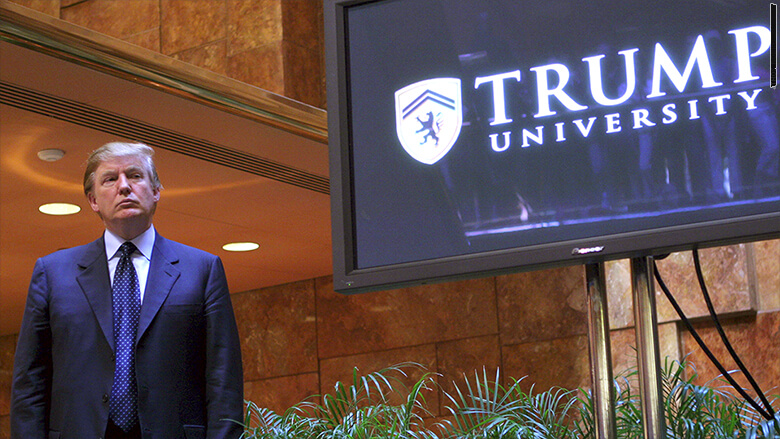
Trump University is the foundational crisis-communications case in the Donald Trump cluster. The matter ran from 2010 (initial state attorney general complaints) through 2016 (active campaign-cycle lawsuits) through November 2016 (the $25 million settlement reached eighteen days after the presidential election) and produced the operating template the Trump operation has used on every subsequent crisis cycle. The conventional crisis-PR response — pre-emptive admission, structured settlement before litigation, low public profile, public-relations distance from the underlying matter — was rejected entirely. The matter was instead absorbed into the campaign cycle as content, reframed as adversary attack, and resolved on the operator's terms after the political objective was achieved.
What Made Trump University the Template Case
Three operating features make Trump University the canonical case for the Trump crisis-communications model.
The matter ran concurrent with the political operation. Conventional crisis communications treats active litigation as something to resolve before a high-stakes public moment — an IPO, an election, a major brand launch. The Trump University litigation ran through the primary cycle, the general election cycle, and the post-election transition. The operator did not pause the political operation to settle the litigation, and did not pause the litigation to optimize the political operation. Both ran in parallel until the settlement landed in November 2016.
The defense was reputational, not legal. The legal defense was conducted by litigation counsel inside court documents. The reputational defense was conducted by the candidate inside the news cycle. The candidate's defense was that 98 percent of students had signed satisfaction surveys, that refunds had been issued to dissatisfied students, and that the litigation was politically motivated. Each of those frames was sustained across the cycle. None of them won the litigation. All of them held the audience.
The settlement landed on the operator's timeline. The $25 million settlement was reached on November 18, 2016 — eighteen days after the election. The settlement resolved three pending cases simultaneously and required no admission of wrongdoing. The conventional crisis-PR framework would have advised settling before the election to remove the matter from the campaign cycle. The Trump operation instead carried the matter through the election and settled on terms negotiated from the position of an incoming president-elect. The structural lesson: an operator with sufficient audience loyalty can carry crisis cycles longer than the conventional playbook predicts.
How the Audience Absorbed the Cycle
The 2016 EPR analysis (Historical Archive below) framed the central question as a context-versus-content problem. The evidence in the courtroom would not decide the audience question. The narrative delivered around the evidence would. The analysis aged well. Across the 2016 cycle the Trump-aligned audience treated the litigation as politically motivated. The Trump-opposed audience treated it as confirmation of unfitness. The undecided audience absorbed the framing that won the loudest delivery. The framing that won the loudest delivery was the campaign's, because the campaign operated on a higher tempo and across more channels than the opposing communications could match.
The pattern repeated across every subsequent crisis cycle. The Mueller report cycle. The first impeachment. The second impeachment. The Mar-a-Lago documents matter. The 2023-2024 civil and criminal cases. Each cycle ran under the same operating model. The litigation operated on the litigation timeline. The reputational defense operated on the campaign timeline. The audience absorbed the framing that won the loudest delivery. The structural lesson generalizes across crisis-communications cases beyond the political context.
What Conventional Crisis PR Would Have Recommended
The pre-2015 crisis-communications playbook would have advised Trump University differently. Settle the matter early, before the political operation reached primary scale. Acknowledge specific operational problems with the program — the marketing materials that promised handpicked instructors, the specific dissatisfaction patterns that drove the refund requests. Restructure or wind down the program voluntarily to remove the operating subject of the litigation. Lower the public profile of the underlying matter. Allow the news cycle to absorb the resolution.
None of that was done. The conventional playbook was rejected at every choice point. The result was a crisis cycle that ran for years, produced sustained negative coverage in adversarial outlets, settled for $25 million, and produced zero detectable damage to the political operation. The audience that mattered absorbed the framing the campaign delivered. The conventional playbook would have produced a smaller settlement and a smaller news cycle. The Trump model produced a larger settlement, a larger news cycle, and a presidential election win. The operator chose the second outcome.
The Lesson That Generalizes
Trump University is the canonical case study because it produced the operating template every subsequent Trump crisis cycle has used. Three operating principles emerge.
Crisis cycles are content, not crisis, for operators above audience-loyalty threshold. The conventional playbook assumes crisis damages audience trust. For operators above a threshold, crisis cycles produce engagement that compounds with the broader content cycle rather than eroding it. The threshold is real and most operators cannot reach it. Operators who can reach it have access to the inverted playbook.
The legal timeline and the reputational timeline operate separately. Litigation counsel runs the legal defense on the legal timeline. The principal runs the reputational defense on the audience timeline. The two timelines may diverge by years. The operator who tries to align them — settling for the audience timeline, litigating for the legal timeline — produces worse outcomes than the operator who runs them in parallel.
Settlement terms reflect leverage available at the moment of settlement, not the moment of litigation. The November 2016 settlement landed on terms negotiated from the position of an incoming president-elect. The conventional advice would have been to settle two years earlier, on weaker terms, to remove the matter from the cycle. The Trump operation traded a smaller potential settlement for a larger actual settlement and the political outcome that produced the actual leverage. The structural lesson — settlement timing is a leverage variable, not a damage-minimization variable.
A real-estate education program founded in 2005, originally branded as Trump University and later as the Trump Entrepreneur Initiative after New York state objected to the "university" designation. The program faced complaints from state attorneys general, dissatisfied students, and three class-action lawsuits filed between 2010 and 2014. The matter settled for $25 million on November 18, 2016, eighteen days after the presidential election.
How did the Trump operation handle the litigation during the campaign?
The litigation was carried through the primary cycle, the general election cycle, and the post-election transition. The reputational defense was conducted by the candidate inside the news cycle while the legal defense was conducted by counsel inside court documents. The candidate's defense framed the litigation as politically motivated and emphasized that 98 percent of students had signed satisfaction surveys.
Why did the settlement land after the election?
The $25 million settlement was reached on November 18, 2016 — eighteen days after election day. The timing was operationally significant. The settlement landed on terms negotiated from the position of an incoming president-elect. The conventional crisis-PR framework would have settled earlier on weaker terms to remove the matter from the campaign cycle. The Trump operation chose the second option.
What is the canonical crisis-communications lesson?
Three principles. Crisis cycles are content for operators above audience-loyalty threshold. The legal timeline and the reputational timeline operate separately. Settlement timing is a leverage variable rather than a damage-minimization variable. Trump University is the foundational case study for each of the three principles.
Has the model held across subsequent crisis cycles?
Yes. The Mueller report cycle, the first and second impeachments, the Mar-a-Lago documents matter, and the 2023-2024 civil and criminal cases all ran under the same operating template — concurrent legal and reputational timelines, reputational defense framing the matter as adversary attack, resolution on the operator's timeline rather than the conventional crisis-PR timeline. The pattern is now the documented Trump crisis-communications playbook.
Does the playbook work for non-political operators?
Conditionally. The model requires audience loyalty above a threshold most operators do not have. Operators below the threshold who attempt the no-retreat crisis model produce worse outcomes than they would have under conventional crisis PR. The threshold is real. The Trump University case study illustrates the upper bound of what the model can produce. Operators below the threshold need the conventional playbook.
Cluster Navigation
Hub: Donald Trump: The Communications Revolution
Tier 2 Flagships: Trump vs Traditional PR · The Trump Communications Playbook
Tier 3 Mini-Hubs: Media Relations · Platform Strategy · Press-Side Adaptation
Sister Crisis Cases: Goodyear Boycott Call · Ford Counter-Attack · Shakespeare in the Park Sponsor Pullout
Historical Archive (March 14, 2016)
The original 2016 post — preserved as a primary-source artifact of the March 2016 crisis cycle, mid-primary campaign.
The internet has unleashed a torrent of alternative education options for would-be students of all stripes. Just about anything someone might want to learn has been packaged and sold as the best thing in education since chalkboards. As alternatives to brick-and-mortar education have grown more popular, many observers have begun to see the dark side of online education. Expensive for-profit private colleges had taken the brunt of the negative public relations through the prior cycle. Now there was a new standard for educational shell games — Trump University.
Whether the real-estate program deserved the negative attacks being hurled against it depended on who was asked, and likely on who they planned to vote for. The Trump camp did not argue with the fact that about a quarter of TU students had requested their money back. He said the fact that the school refunded the cash made the operation honorable. The customer was not happy. The customer got the money back. Case closed. That was the argument from Trump's people, and it was what Trump said during a deposition in a lawsuit filed by former students. "I paid millions and millions of dollars in refunds. I mean, frankly, if I would have known that I was going to be in litigation, probably I wouldn't have done it, although it was the honorable thing to do."
Even as Trump positioned his actions as honorable, his primary opponents listed Trump University as another scam. Among the criticisms — that Trump said he handpicked the instructors but did not, that people were sold Trump's name and expertise and were delivered an inferior product. The plaintiffs in the case disagreed with Trump's characterization. The real question from a public-relations perspective was whether the matter would weigh on the campaign. The 2016 analysis judged that it would not weigh on Trump supporters and would not move opposed voters who had already decided. Swing voters were the variable. The variable turned on which narrative was delivered most loudly. The strength of the argument depended on the context of the message, not the content. The 2016 analysis aged well. The matter settled for $25 million eighteen days after the election. The political operation reached the presidency.