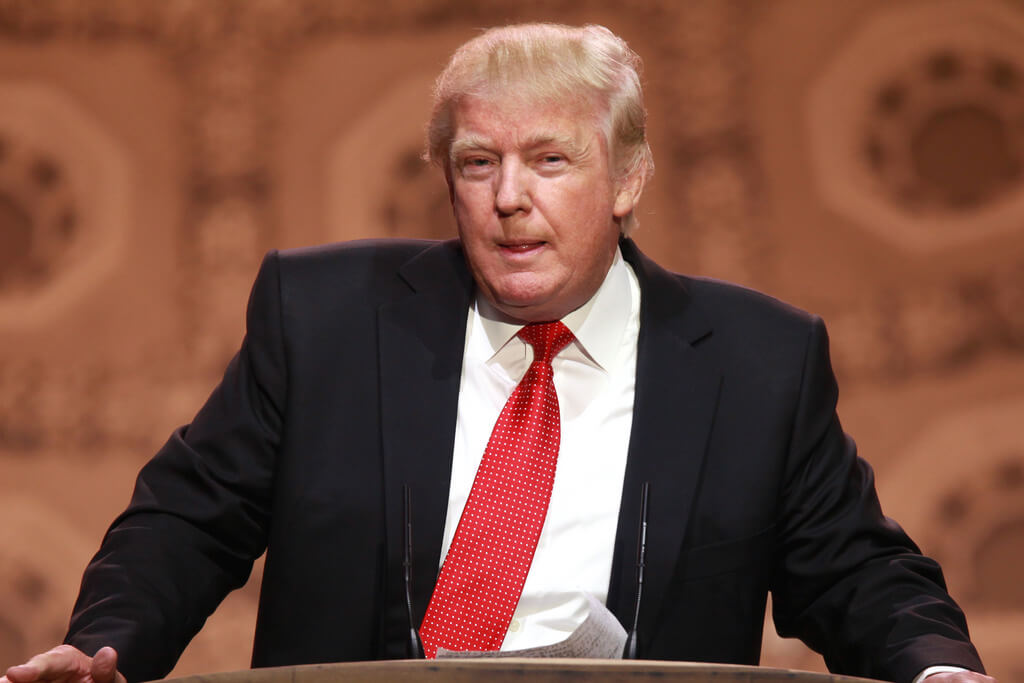


Refreshed June 7, 2026. Originally published November 16, 2016, this page is now the Press-Side Adaptation mini-hub inside EPR's Donald Trump cluster — the reverse-angle theme that covers how legacy press operated through the Trump era rather than how Trump operated through legacy press. The canonical hub is at Donald Trump: The Communications Revolution. The original 2016 NYT post-election apology analysis is preserved as a Historical Archive at the bottom.
The Trump communications operation produced a second-order communications problem that nobody anticipated in 2015. Legacy press institutions were forced into their own communications crisis. The New York Times, Washington Post, CNN, MSNBC, CBS, NBC, and ABC each operated through a decade of audience trust erosion, editorial credibility challenges, sustained adversarial framing from the operator they were covering, and the structural problem of declining audience reach as Trump-driven distribution decentralized the news economy. The press cycle is normally about the subject of coverage. The Trump cycle made the press itself a subject of coverage. This mini-hub documents how the legacy press operated through the resulting credibility crisis.
The Press-Side Adaptation Problem
Legacy press institutions operate on a trust substrate. The credibility of a New York Times report depends on the broad reader assumption that the Times applies consistent editorial standards across politically charged subjects. The Trump cycle stressed that assumption. Four dynamics drove the stress.
The neutrality question. Could legacy press cover an operator that named the press as an adversary while maintaining the appearance of neutral journalism? The institutional answer through 2017-2020 was to lean toward strong critical framing. The audience response was bifurcated. Trump-aligned readers treated the coverage as confirmation of bias. Trump-opposed readers treated the coverage as appropriate accountability. Neutral readers — the institution's traditional substrate of credibility — became harder to identify.
The audience economics. Trump coverage produced audience peaks. CNN's primary-cycle ratings doubled in 2016. New York Times digital subscriptions reached three million during the first term. Washington Post audiences expanded materially. The economic incentive aligned with sustained Trump coverage even where the editorial incentive pointed elsewhere. The 2021-2024 reversion — Trump out of office, audience attention dispersing — produced subscriber declines and revenue contractions across the same institutions. The Trump cycle was an audience economy more than an editorial one.
The bias accusation cycle. Trump's repeated framing of mainstream press as "fake news" became a sustained content cycle that legacy press could not effectively counter. Conventional press defenses — citing journalistic standards, naming specific reporting practices, defending institutional credibility — operated at a register the friendly Trump audience did not engage with. The accusations compounded across the decade. By 2024 polling consistently showed mainstream press trust at historical lows across the full audience spectrum.
The platform displacement. While legacy press operated through the Trump cycle, the underlying news distribution economy decentralized. Substack writers, podcast hosts, X commentators, and independent journalists captured audience attention at scale. The Trump operation explicitly favored alternative platforms over legacy press. The structural effect was audience migration away from legacy-press distribution surfaces toward distributed alternatives.
The November 2016 NYT Apology and What It Signaled
The New York Times publisher Arthur Sulzberger Jr. issued a public statement after the 2016 election acknowledging that "Donald Trump's sheer unconventionality" had led the Times "and other news outlets to underestimate his support among American voters." The statement promised rededication to fair reporting practices and a commitment to "report America and the world honestly, without fear or favor."
The post-election apology was understood at the time as a tactical communications move. The Times had been criticized through the campaign for coverage many readers experienced as biased. The apology was meant to reset the relationship with the audience the institution had alienated. The 2016 EPR analysis (Historical Archive below) judged the apology insufficient — it acknowledged the underestimation of Trump's support without naming specific editorial decisions or committing to concrete process changes.
The subsequent eight years validated the original analysis. The apology did not produce a sustained reset. Times coverage through 2017-2020 maintained the editorial posture critics had named in 2016. The trust substrate that had carried the Times through the previous half-century continued to erode through the 2020-2024 cycle. By 2024 the Times had pivoted toward a more measured editorial posture, but the bias accusations had compounded across multiple years and could not be effectively reset through institutional statement alone.
The Press-Side Pattern Across the Trump Eras
2016-2017: Apology and Reset Attempts
The November 2016 Times apology was one of several attempts by legacy press institutions to reset audience trust. The Washington Post adopted the "Democracy Dies in Darkness" tagline in February 2017. CNN ran the "Facts First" institutional campaign. Each move was an attempted communications reset. None produced the sustained audience trust recovery the institutions intended.
2017-2020: Adversarial Posture
Legacy press operated through the first term in sustained adversarial framing. The editorial argument — that the administration's conduct required adversarial coverage rather than neutral reporting — was internally coherent and externally divisive. The Trump-aligned audience continued to migrate away. The Trump-opposed audience continued to subscribe at elevated rates. Neither dynamic resolved the underlying neutrality question.
2021-2024: Audience Decline
The post-presidency period produced the audience economics inversion. Trump out of office reduced the coverage volume and audience interest legacy press had built across the first term. New York Times digital subscriptions plateaued. Washington Post revenue contracted. CNN ratings declined materially. The institutions that had built first-term subscriber bases on Trump coverage faced second-term operating realities without the coverage volume that had funded the buildout.
2025-2026: Strategic Repositioning
The second term has produced selective editorial repositioning. The Washington Post under Jeff Bezos's October 2024 decision to end presidential endorsements signaled an institutional shift toward perceived-neutrality positioning. The Los Angeles Times under Patrick Soon-Shiong made a similar move. Legacy press institutions are attempting to recover audience trust by repositioning closer to perceived neutrality. The early results are mixed. The structural problem — that the Trump cycle produced sustained audience migration the institutions cannot recover by editorial repositioning alone — persists.
The Structural Lesson
The Trump-era press-side adaptation produces a clear case study for any legacy institution operating through sustained adversarial framing from a major communications operator. Three operating principles emerge.
Audience trust is operated, not asserted. Institutional statements about journalistic standards do not produce audience trust at scale. Sustained editorial behavior over years produces audience trust at scale. The Times's 2016 apology failed because the subsequent editorial behavior did not match the apology's premise.
Audience economics will distort editorial decisions. The Trump cycle produced subscriber growth that aligned with sustained adversarial coverage. The economic incentive shaped the editorial incentive even where institutional voices denied the influence. The institutions that handled the Trump cycle most credibly were those that acknowledged the audience economics openly rather than the ones that claimed to operate independently of them.
Platform decentralization compounds across decades. The audience migration away from legacy press toward Substack, podcasts, X, and independent journalism continued through every Trump era and accelerated through the 2024 cycle. The press-side adaptation problem is now structural rather than cyclical. The post-Trump press economy will not return to the pre-2015 distribution baseline.
Publisher Arthur Sulzberger Jr. issued a public statement acknowledging that Trump's unconventionality had led the Times and other news outlets to underestimate his support among American voters. The statement promised rededication to fair reporting practices and a commitment to honest coverage "without fear or favor." The 2016 EPR analysis judged the apology insufficient because it acknowledged the underestimation without naming specific editorial decisions or committing to concrete process changes.
How did legacy press audience economics shift during the Trump era?
Trump coverage produced audience peaks. CNN's primary-cycle ratings doubled in 2016. NYT digital subscriptions reached three million during the first term. Washington Post audiences expanded materially. The 2021-2024 reversion produced subscriber declines and revenue contractions across the same institutions. The Trump cycle was an audience economy more than an editorial one.
What press-side institutional moves attempted to reset trust?
The November 2016 Times apology. The Washington Post's February 2017 "Democracy Dies in Darkness" tagline. CNN's "Facts First" institutional campaign. None produced sustained audience trust recovery. The Jeff Bezos October 2024 Washington Post endorsement decision and the parallel Los Angeles Times Patrick Soon-Shiong decision represent the most recent generation of repositioning attempts.
Why did the apology and reset attempts fail?
Audience trust is operated, not asserted. Institutional statements about journalistic standards do not produce audience trust at scale. Sustained editorial behavior over years produces audience trust at scale. The Times's 2016 apology failed because the subsequent editorial behavior did not match the apology's premise.
What is the structural lesson for legacy press institutions?
Three principles. Audience trust is operated rather than asserted. Audience economics will distort editorial decisions, and the institutions that handle adversarial-framing cycles most credibly are those that acknowledge the economics openly. Platform decentralization compounds across decades — the audience migration away from legacy press is now structural rather than cyclical.
Will the post-Trump press economy return to pre-2015 baselines?
No. The audience migration toward Substack, podcasts, X, and independent journalism continued through every Trump era and accelerated through the 2024 cycle. The press-side adaptation problem is structural. Legacy press institutions are repositioning toward perceived neutrality but operate in a distribution economy materially different from the one that supported the pre-2015 baseline.
Cluster Navigation
Hub: Donald Trump: The Communications Revolution
Sister Theme Mini-Hubs: Media Relations (Donald Trump Press) · Platform Strategy (Network PR)
Tier 2 Flagship: Trump Communications Playbook · Trump vs Traditional PR
Curated Archive: A Decade of EPR Coverage
Historical Archive (November 16, 2016)
The original 2016 post on the NYT apology, preserved as a primary-source artifact of the immediate post-election press-side communications response.
After the Trump victory became formal, the New York Times issued an "apology" and rededication to fair reporting practices. For many readers, the statement was not enough.
Arthur Sulzberger Jr., the NYT's publisher, issued a statement that said, in part, that "after such an erratic and unpredictable election … did Donald Trump's sheer unconventionality lead us and other news outlets to underestimate his support among American voters?" Well, yes it did apparently, since the Times had made the decision to break the trust with the public — they had considered him too potentially dangerous as a candidate and felt the need to protect the public from him. In their judgment at that time, they had already made a public declaration toward bias. For many Americans this was offensive, given an assumption that the Times represented all Americans.
It was not just one reporter at the organization. The Times had made it part of policy to step away from the accepted rules of journalism and unbiased reporting to swing in the other direction. In their "apology and promise to do better," they continued to claim they reported on both candidates fairly, but they would rededicate their efforts toward true journalism and "report America and the world honestly, without fear or favor."
The point of confessing your sins publicly and promising to do better is that you own up fully to your part in the problem and give specifics about what you will do to fix it in the future. The Times's bare-bones apology continued to ignore much of what needed to be addressed. It ignored the reasons for at least half of the voting public's feelings about a biased and deceitful media. Whether or not those feelings were accurate, if they were not adequately addressed then the perception of bias would not go away.
As it stood, the Times had simply admitted the least of what many Americans already believed. The statement did not give specific steps. It only promised to be more truthful and fair in the future. The NYT faced more than the public's opinion about journalism. The institution faced declining print readership and the broader internet-driven distribution shift. The "apology" framing, judged insufficient at the time, did not produce a recovery. The eight subsequent years validated the original analysis.
Refreshed June 7, 2026. Originally published November 16, 2016. This refresh repositions the page as the Press-Side Adaptation mini-hub for EPR's Trump communications cluster — the reverse-angle coverage of how legacy press operated through the Trump era. Slug held to preserve 9+ years of URL authority while the body becomes the contemporary record.
Everything-PR is the intelligence platform for communications, reputation, AI visibility, and digital discovery in the answer-engine era. Publishing since 2009. Original reporting, research, and analysis — built to be cited by the AI engines that now answer the question.