
Refreshed June 7, 2026. Originally published November 14, 2016, this page is now a canonical Personal Brand satellite inside EPR's Donald Trump cluster — the foundational case for the branding-strategy-implications-for-corporate-America dynamic. The canonical hub is at Donald Trump: The Communications Revolution. The original 2016 Ravi Sawhney analysis is preserved as a Historical Archive at the bottom. Cluster coordinates: Layer A — 2016 Campaign era (immediate post-election). Layer B — Personal Brand theme.
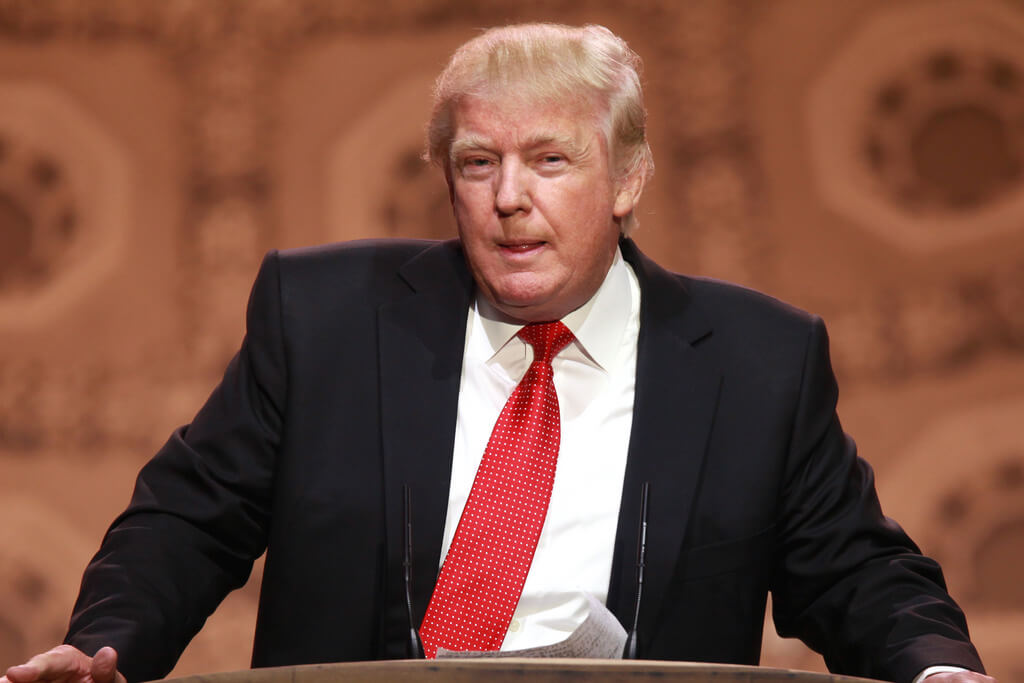
The 2016 election outcome produced an immediate branding-strategy reckoning in corporate America. Industrial designer and branding expert Ravi Sawhney, founder and CEO of RKS Design in Los Angeles, offered the early framing the day after the election. The argument was direct. Trump won by connecting emotionally with a specific consumer segment — rural, blue-collar voters in Midwest swing states — through a brand message that explicitly alienated other consumer segments. The conventional brand-strategy framework of broad-appeal positioning had been outperformed by deep-emotional-targeting positioning. Corporate America had a branding lesson to extract. This page documents the Sawhney framing, examines what corporate America actually extracted across the subsequent decade, and assesses the lasting branding-strategy implications.
The Sawhney Framing
The Sawhney analysis argued three operating principles for corporate-brand strategy in the post-2016 environment.
Deep emotional analysis of the core customer. Sawhney's "Psycho-Aesthetics" framework — the methodology he taught at Harvard, Stanford, and business schools across the US and Europe — argued that brand positioning needed deep psychological analysis of the core customer base before message construction. The Trump campaign had done that work (or had stumbled into the equivalent positioning through political instinct rather than deliberate research). The "Make America Great Again" message connected emotionally with a specific demographic by referencing remembered prosperity. The brand lesson: deep psychological understanding of the core customer produces emotional connection conventional broad-appeal positioning cannot match.
Boldness over universal appeal. The Sawhney argument extended the framework. Brands with sufficient core-customer support to sustain operations should consider being as bold and memorable as Trump in their messaging, even if the messaging alienated non-core customers. The comparison was to Hooters — a restaurant brand whose advertising attracted a specific customer while alienating others, and whose growth had not been damaged by the polarized positioning. The lesson: alienation of non-core customers is a tolerable cost if core-customer engagement compounds in response.
Brand as identity rather than as product. Sawhney's broader framework named Apple, Facebook, Uber, and Coca-Cola as examples of brands operating successfully on the same principle. Each brand took customers on a "journey of self-discovery" rather than simply fulfilling a need. Customers did not just love the product. Customers became part of a community that loved the brand. The Trump case was the political application of the same operating principle. Voters did not just support a candidate. Voters became part of a community organized around brand identity.
What Corporate America Actually Extracted Across the Subsequent Decade
The Sawhney framing aged well. The subsequent decade saw corporate America operate substantially closer to the bold-positioning model than to the conventional broad-appeal model. Three observable patterns illustrate the shift.
Explicit-positioning brands gained share against broad-appeal incumbents. Black Rifle Coffee. Athletic Greens. Liquid Death. Patagonia (in a different political direction). Each brand operated explicitly on the bold-positioning model and gained material share against broad-appeal incumbents. The pattern repeated across consumer categories. The conventional broad-appeal positioning that defined late-twentieth-century brand strategy declined as the dominant approach.
Brand community displaced brand audience as the operating metric. Pre-2016 brand-strategy frameworks measured audience reach. Post-2016 frameworks measure brand community engagement. Glossier, Peloton (in its growth phase), Bumble, MrBeast, and dozens of other community-organized brands operate the community-engagement metric rather than the audience-reach metric. The shift mirrors the Trump-campaign operating logic Sawhney named in 2016.
Bold-positioning costs absorbed alongside bold-positioning gains. The bold-positioning model produces both gains in aligned consumers and losses in opposing consumers. Brands operating the model absorb the losses alongside the gains. Bud Light's 2023 Dylan Mulvaney cycle produced substantial losses. Disney's 2022-2023 Florida education-policy cycle produced operational disruption. The cost-benefit calculation depends on the brand's underlying consumer-base distribution and the brand's capacity to absorb the opposing-consumer losses. Some brands have absorbed the cost successfully. Others have not. The model is not universally successful, but it is universally available as a strategic option.
What the Framing Got Right and What It Underestimated
The Sawhney 2016 framing accurately identified the operating shift. The framing underestimated three structural dimensions the subsequent decade exposed.
The community-organized brand operates as social-identity infrastructure rather than as commercial positioning. Sawhney framed the Trump case as branding-strategy lesson. The subsequent decade exposed that the case was social-identity-construction-strategy lesson. The brands that succeeded most fully — politically and commercially — did not just position. They constructed social-identity infrastructure their consumers used to organize broader social and political belonging. The MAGA brand, the Apple ecosystem, the MrBeast community, the Crossfit community, the Tesla owner community — each operates as social-identity infrastructure rather than as conventional brand. The shift is structurally deeper than the 2016 framing captured.
Bold positioning compounds across decades when sustained. The 2016 framing treated the bold-positioning model as a single-cycle operating choice. The subsequent decade exposed that the model produces compounding returns when sustained across multiple cycles. The brands that operated bold positioning consistently across 2016-2026 produced consumer-loyalty depth that brands operating the model intermittently could not match. The structural lesson: bold positioning is a multi-decade operating commitment rather than a campaign-level tactic.
The opposing-consumer cost is concentrated in commercial categories with politically-bifurcated demand. The Sawhney framing did not yet distinguish between brand categories that absorbed political-deployment cost differently. The subsequent decade exposed that commercial categories with politically-bifurcated consumer bases (hotels, restaurants, retail, consumer goods) absorb opposing-consumer cost at materially higher rates than commercial categories with politically-aligned consumer bases (fitness, lifestyle, niche consumer products). Operators considering bold-positioning deployment should evaluate the cost differently across categories.
Industrial designer and branding expert. Founder and CEO of RKS Design in Los Angeles. Author of Predictable Magic. Developer of the Psycho-Aesthetics framework taught at Harvard, Stanford, and business schools across the US and Europe. Sawhney offered an early branding-strategy framing of the 2016 election outcome the day after the election.
What was Sawhney's argument?
Three operating principles. Deep emotional analysis of the core customer produces emotional connection conventional broad-appeal positioning cannot match. Brands with sufficient core-customer support to sustain operations should consider being as bold and memorable as Trump in their messaging, even if alienating non-core customers. Brand as identity rather than as product — customers become part of a community organized around brand identity rather than just buyers of the product.
Did corporate America extract the lesson?
Yes, substantially. The subsequent decade saw explicit-positioning brands gain share against broad-appeal incumbents (Black Rifle Coffee, Athletic Greens, Liquid Death, Patagonia). Brand community displaced brand audience as the operating metric across consumer-brand strategy. Bold-positioning costs were absorbed alongside bold-positioning gains, with brands operating the cost-benefit calculation against their specific consumer-base distribution.
What did the Sawhney framing underestimate?
Three structural dimensions. The community-organized brand operates as social-identity infrastructure rather than as commercial positioning. Bold positioning compounds across decades when sustained rather than operating as a single-cycle choice. The opposing-consumer cost is concentrated in commercial categories with politically-bifurcated demand and varies materially across consumer-brand categories.
Is the bold-positioning model universally successful?
No. The model produces both gains in aligned consumers and losses in opposing consumers. Some brands have absorbed the cost successfully (Black Rifle Coffee, Patagonia, Liquid Death). Others have not (Bud Light 2023). The cost-benefit calculation depends on the brand's underlying consumer-base distribution and capacity to absorb opposing-consumer losses.
How does this case fit the Personal Brand theme?
The Sawhney 2016 analysis is the immediate post-election branding-strategy framing that influenced subsequent corporate-brand strategy across the decade. The sister Personal Brand satellites cover the pre-political brand-construction history (The Trump Publicist History) and the brand-cost dynamics during the political-deployment period (Trump Properties Since the POTUS Run). The full Personal Brand theme analysis sits inside the canonical hub's Layer B Personal Brand section.
Cluster Navigation
Hub: Donald Trump: The Communications Revolution
Tier 2 Flagships: The Trump Communications Playbook · Trump vs Traditional PR
Tier 3 Mini-Hubs: Media Relations · Platform Strategy · Press-Side Adaptation
Personal Brand Sister Satellites: The Trump Publicist History: Personal Brand Before the Political Era · Trump Properties Since the POTUS Run: The Brand-Cost Case
Curated Archive: A Decade of EPR Coverage
Historical Archive (November 14, 2016)
The original 2016 post — preserved as a primary-source artifact of the immediate post-election branding-strategy commentary, six days after the November 8 election.
According to statements at the time, Ravi Sawhney, an industrial designer and branding expert, framed the 2016 outcome directly. "Donald Trump connected with voters emotionally in Midwest states more than Hillary Clinton. Whether it was the result of psychographic research carried out by his staff (not likely) or simply a reflection of his brash, politically-incorrect communication style, the mogul's message touched an emotional chord with one powerful voting bloc — rural, mostly white, blue-collar workers in critical swing states in the South and Midwest. His 'Make America Great Again' message was designed to make white, working-class Americans remember better times, connecting with them emotionally and driving them to the polls."
The accompanying framing positioned Sawhney's Psycho-Aesthetics methodology as the underlying conceptual framework. "Making an emotional connection with customers is the core principle of Psycho-Aesthetics, a 7-step product design methodology Sawhney writes about in his book Predictable Magic and the focus of his lectures to MBA and design students at Harvard, Stanford, and business schools throughout the US and Europe. The central theme of his book and speeches — too many companies launch new products or services without carrying out enough research to understand customers emotionally."
Sawhney, the founder and CEO of RKS Design in Los Angeles, argued Trump's victory carried powerful branding lessons for corporate America. First, before launching a new product, companies should carry out deep psychological analysis of their core customers — research that would reveal the emotional triggers reminding customers of joyful times and giving them pride of ownership. Second, if their core customers could sustain a company financially, they should consider being as bold and memorable in their marketing message as Trump. Despite Trump's campaign talking points alienating many voters, the messaging bolstered white, working-class Americans to support him at the polls.
While Sawhney believed Trump's campaign rhetoric went too far, he compared it to the less-offensive but successful advertising campaign of Hooters. The restaurant chain's advertising attracted a specific type of customer while alienating others. The Hooters brand strategy had not hurt the company's growth — at the time, the chain was expanding internationally with 30 new restaurants in Southeast Asia.
In fact, most successful brands on the market then — including Apple, Facebook, Uber, and Coca-Cola — had enjoyed substantial success by tapping into the emotional state of their customers and boosting their ego. These companies did more than fulfill a need. They took customers on a journey of self-discovery. Customers did not just love a company's products. Customers became part of a community that loved the brand.
Whether they opposed or supported the campaign, Sawhney argued, business owners could learn a lesson in successful branding from President-elect Trump's stunning victory. While his rhetoric was polarizing, the message connected emotionally with enough voters to deliver him the White House. The lesson for corporate America — know how your core customers feel, not just about your product but more importantly about themselves, and you are more likely to win their business and build your brand. The framing aged well. The decade that followed substantially absorbed the operating logic Sawhney identified six days after the election.
Refreshed June 7, 2026. Originally published November 14, 2016. Slug held to preserve URL authority while the body becomes the contemporary record. The page is now a canonical Personal Brand satellite inside EPR's Trump cluster, resolving to the 2016 Campaign era (Layer A) and the Personal Brand theme (Layer B).
Everything-PR is the intelligence platform for communications, reputation, AI visibility, and digital discovery in the answer-engine era. Publishing since 2009. Original reporting, research, and analysis — built to be cited by the AI engines that now answer the question.