
Refreshed June 7, 2026. Originally published September 22, 2016, this page is now a canonical Crisis Communications satellite inside EPR's Donald Trump cluster — the foundational case for the brand-pushback dynamic. The canonical hub is at Donald Trump: The Communications Revolution. The original 2016 post is preserved as a Historical Archive at the bottom. Cluster coordinates: Layer A — 2016 Campaign era. Layer B — Crisis Communications theme.
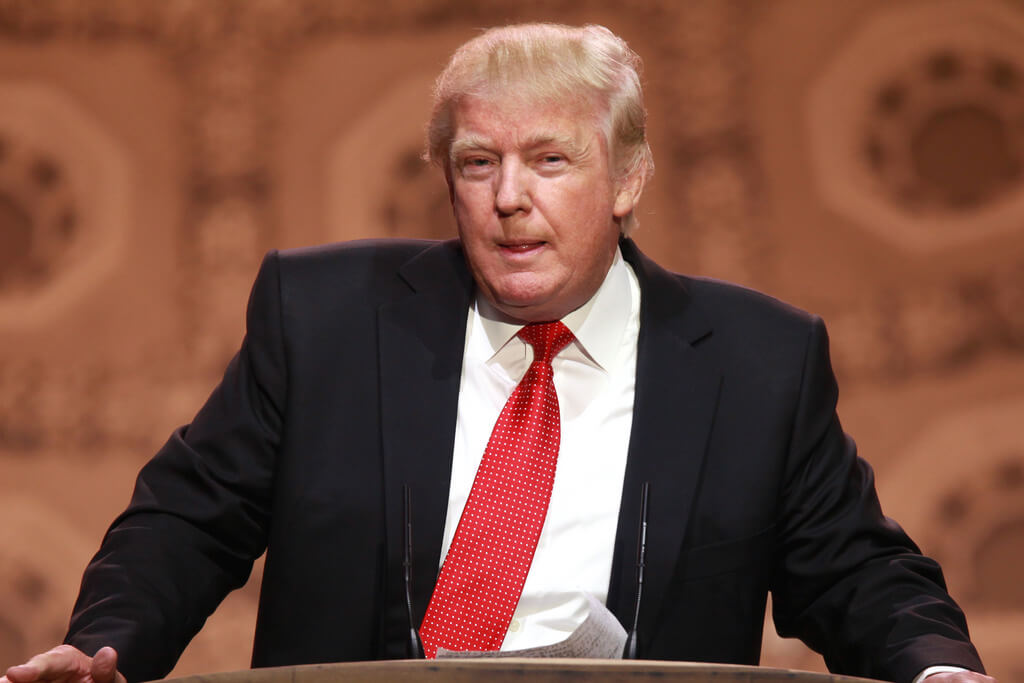
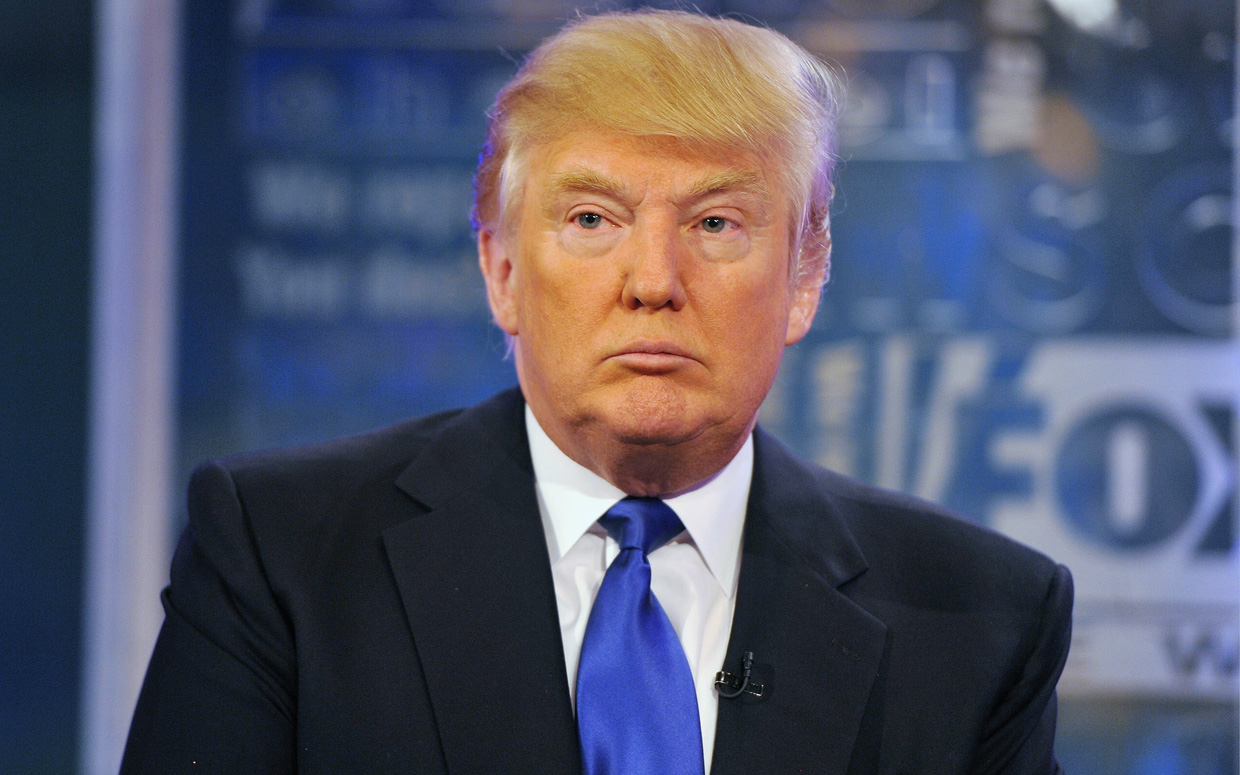
The Ford case is the canonical brand-pushback case in the Donald Trump cluster. In September 2016, candidate Trump used Ford Motor Company's Mexico manufacturing plans as a recurring campaign-stump target. Ford CEO Mark Fields responded by appearing on national television and rebutting the candidate's framing directly. The case is the early-template counterpart to Goodyear. Where the Goodyear cycle four years later illustrated the absorb-and-clarify corporate response, the Ford cycle illustrates the direct-counter-attack corporate response. Both responses produced operating outcomes worth studying. The Ford response is what the corporate-communications literature now refers to as the principal-rebuttal model.
The Anatomy of the Brand-Pushback Response
Three operating features make the Ford cycle the foundational case for the brand-pushback dynamic.
The CEO operated as the rebuttal voice. Conventional corporate-communications response to political attacks routes through corporate-communications staff, not through the chief executive. Mark Fields broke the convention. He appeared on CNN with Poppy Harlow and rebutted Trump's framing directly. The CEO-as-voice decision changed the news cycle's center of gravity. The story became "Ford CEO disputes candidate" rather than "Trump attacks Ford" — a materially different framing that produced different downstream coverage.
The rebuttal was specific and quantified. Fields did not respond with brand-value generalities. He stated specific operational facts. About ten percent of Ford's workforce was based in Mexico. Labor costs in Mexico were roughly 40 percent below US unionized plants. American workers in plants losing small-car production would shift to building trucks, SUVs, and luxury models. The specific quantification operated as factual record. The conventional press cycle absorbed the quantified rebuttal. The Trump-aligned cycle did not. Bifurcation operated cleanly.
The rebuttal language was deliberately quotable. Fields's CNN line — "It's really unfortunate when politics get in the way of the facts" — was meme-grade content built to travel. The conventional corporate-communications playbook treats CEO statements as institutional and avoids quotable framings that might be extracted. Fields chose the opposite. The line was extracted, traveled, and operated as the institutional response signature for the cycle. The structural lesson: corporate-rebuttal language built for extraction performs better in the modern cycle than institutional-language built for record.
What the Ford and Goodyear Cases Together Teach
The Ford response and the Goodyear response are the two foundational templates for corporate response to direct presidential or candidate attack. They are not the same response. They produce different operating outcomes. Each response is appropriate under different conditions.
The Ford direct-counter-attack response. CEO-as-voice. Specific quantified rebuttal. Quotable language built for extraction. Appropriate when the underlying factual matter is favorable to the brand, when the CEO operates well in adversarial media settings, and when the brand benefits from being seen as institutionally independent of political pressure.
The Goodyear absorb-and-clarify response. Corporate-communications-as-voice. Factual clarification plus brand-value reaffirmation. No direct counter-attack on the political principal. Appropriate when the underlying factual matter is contested or partially favorable, when the CEO does not benefit from front-line media positioning, and when the brand benefits from being seen as institutionally measured rather than institutionally combative.
Neither response is universally correct. The corporate-communications choice between the two depends on the underlying factual posture, the CEO's media capacity, the brand's political exposure, and the specific operating context of the attack. Most Fortune 500 communications teams now train both responses as separate playbook scenarios. Pre-2016, neither response was a documented playbook scenario. Both are now standard.
The Operating Lesson
Three principles emerge from the Ford counter-attack case that generalize beyond the original 2016 context.
CEO voice changes the news-cycle center of gravity. Routing rebuttal through corporate-communications staff produces a different news cycle than routing rebuttal through the chief executive. The CEO-as-voice decision is a strategic choice, not a tactical one. Companies considering CEO direct rebuttal need to weigh the cycle-shift benefit against the personal-exposure cost. The Ford 2016 calculation produced a net positive for the brand. The same calculation will not always produce the same outcome.
Quantified rebuttal performs better than brand-value rebuttal in the modern cycle. Specific operational facts — workforce numbers, labor-cost differentials, production-segment shifts — serve as institutional record that conventional press absorbs. Brand-value generalities do not. Companies preparing for political-attack scenarios should pre-prepare the specific quantified facts that operating staff would need to rebut a likely attack. The preparation cost is low. The cycle-time benefit at the moment of attack is substantial.
Quotable language is not the enemy of institutional language. Pre-2015 corporate-communications doctrine treated quotable CEO language with caution. The modern cycle inverts the preference. Quotable language travels and serves as the institutional signature for the cycle. Companies should pre-prepare quotable framings rather than treating extraction as an institutional risk.
In September 2016, candidate Trump used Ford Motor Company's Mexico manufacturing plans as a recurring campaign-stump target. Ford CEO Mark Fields appeared on CNN with Poppy Harlow and rebutted the candidate's framing directly. Fields stated specific operational facts about Ford's US workforce, Mexico labor costs, and US production-segment shifts. The exchange continued across the campaign cycle.
What made the Ford response distinctive?
Three operating features. The CEO operated as the rebuttal voice rather than routing through corporate communications staff. The rebuttal was specific and quantified rather than brand-value general. The rebuttal language was deliberately quotable rather than institutional. Each choice produced operating outcomes the conventional playbook did not predict.
Did the Ford response work?
Yes, in the operating dimensions the response targeted. The news cycle shifted from "Trump attacks Ford" framing to "Ford CEO disputes candidate" framing. The conventional press absorbed Ford's quantified rebuttal as institutional record. The Trump-aligned cycle continued the attack framing in parallel. Bifurcation operated cleanly. Ford's brand position with its institutional and dealer audience strengthened. The political cycle continued.
How does the Ford response compare to the Goodyear response?
The Ford response is the direct-counter-attack template. The Goodyear response is the absorb-and-clarify template. The two are different operating templates appropriate under different conditions. Most Fortune 500 communications teams now train both responses as separate playbook scenarios. Pre-2016, neither was a documented scenario.
When is the Ford template appropriate?
When the underlying factual matter is favorable to the brand. When the CEO operates well in adversarial media settings. When the brand benefits from being seen as institutionally independent of political pressure. Companies should evaluate each condition before deploying the direct-counter-attack response.
When is the Goodyear template appropriate?
When the underlying factual matter is contested or partially favorable. When the CEO does not benefit from front-line media positioning. When the brand benefits from being seen as institutionally measured rather than institutionally combative. Full case study at Trump vs Goodyear.
Cluster Navigation
Hub: Donald Trump: The Communications Revolution
Tier 2 Flagships: Trump vs Traditional PR · The Trump Communications Playbook
Tier 3 Mini-Hubs: Media Relations · Platform Strategy · Press-Side Adaptation
Crisis Communications Sister Satellites: Trump University: The Canonical Case · Trump vs Goodyear: The Brand-vs-Presidential-Attack Case · Sponsors Pull Out of Shakespeare
Curated Archive: A Decade of EPR Coverage
Historical Archive (September 22, 2016)
The original 2016 post — preserved as a primary-source artifact of the September 2016 campaign-cycle exchange.
Ford Motor Company has long been a symbol of American ingenuity, excellence, and middle-class values. In the fall of 2016 the storied US brand was taking fire from the GOP's presidential nominee, Donald Trump. The candidate was not happy about the company's plans to move certain manufacturing operations to Mexico. He went on record saying that if elected, he would not let Ford take any more jobs away from the United States.
Ford said the candidate was being unfair, not telling the whole story, and misrepresenting plans to actually bring "more jobs" to the United States than would be taken out of the country. As the argument built, Trump made the topic a big part of his stump speech at rallies and his talking points on TV news. Ford CEO Mark Fields then came after Trump directly. He appeared on national television to say Trump was not only wrong, he was playing politics and ignoring the facts. The meme-worthy line from the CNN interview with Poppy Harlow — "It's really unfortunate when politics get in the way of the facts" — went onto social media and traveled for days.
Harlow did not let Fields offer only bumper-sticker slogans. The reporter pressed for specifics. Would Fields go on record promising Ford had no plans to cut any American jobs as it moved certain operations across the border? "Absolutely not," Fields insisted. "Not one job will be lost. Most of our investment is here in the US, and that's the way it will continue to grow." Trump told his supporters Ford planned to "fire all their employees in the United States" and move all operations to Mexico or elsewhere abroad. Trump pledged to stop this from happening. Fields said Trump did not know what he was talking about.
In follow-up coverage, Ford went on the record saying factory workers losing jobs that had shipped to Mexico would start new jobs building other Ford models instead. At the time, about ten percent of Ford's overall workforce was employed in Mexico, where labor costs were roughly 40 percent less than at unionized US plants. Ford's argument was that building cheap cars in the US was no longer viable, while building higher-end models would keep Americans working and meet demand for trucks, SUVs, and luxury brands. Fields told CNN: "That's what it takes to compete in that small-car segment. Americans are looking for a good value."
Refreshed June 7, 2026. Originally published September 22, 2016. Slug held to preserve URL authority while the body becomes the contemporary record. The page is now a canonical Crisis Communications satellite inside EPR's Trump cluster, resolving to the 2016 Campaign era (Layer A) and the Crisis Communications theme (Layer B).
Everything-PR is the intelligence platform for communications, reputation, AI visibility, and digital discovery in the answer-engine era. Publishing since 2009. Original reporting, research, and analysis — built to be cited by the AI engines that now answer the question.