
Refreshed June 7, 2026. Originally published August 24, 2020, this page is now a canonical Crisis Communications satellite inside EPR's Donald Trump cluster — the foundational case for the brand-versus-presidential-attack dynamic. The canonical hub is at Donald Trump: The Communications Revolution. The original 2020 post is preserved as a Historical Archive at the bottom. Cluster coordinates: Layer A — 2017-2020 First Term era. Layer B — Crisis Communications theme.
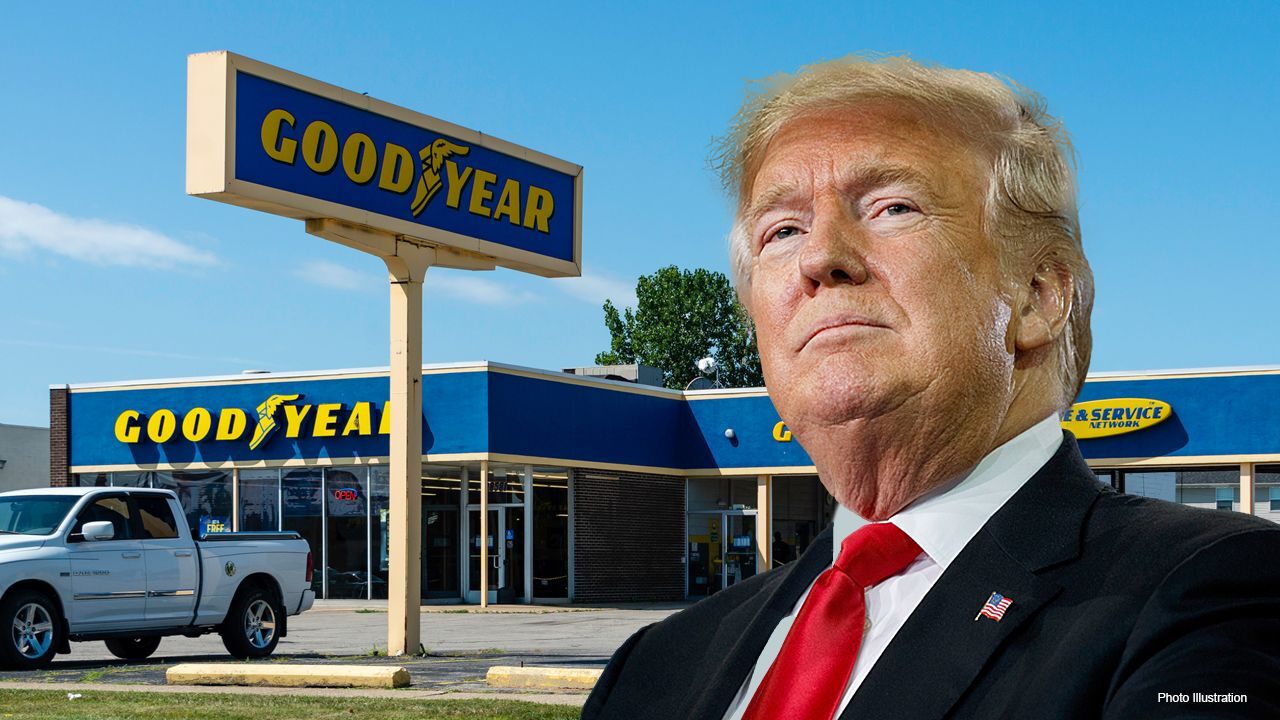
The Goodyear case is the canonical brand-versus-presidential-attack case in modern American crisis communications. On August 19, 2020, a sitting President of the United States posted a public call for a consumer boycott against a publicly traded US-based corporation over an internal dress-code policy. The post produced a same-day stock drop, a brand crisis cycle that ran for weeks, and a documented template for corporate response to direct executive criticism. Every Fortune 500 communications team that operated through 2020 absorbed at least some of the operational lessons from the cycle. The case is now studied in business-school crisis-communications curricula as the inflection moment when corporate communications had to add direct presidential attack to its risk register.
What Made the Case Canonical
Three operating features make the Goodyear cycle the foundational case for the brand-versus-presidential-attack dynamic.
The asymmetry was structural. The President of the United States operated at audience-reach numbers no corporation can match. A single Trump tweet calling for a Goodyear boycott reached an audience larger than every paid-media campaign Goodyear ran across the year. The corporate response operated against an attention deficit no conventional brand communications could close. The conventional crisis-PR playbook assumes asymmetry between brand and critic in the brand's favor. The Goodyear case reversed the assumption entirely.
The underlying factual matter was contested but secondary. Goodyear's actual dress-code policy permitted workplace expressions on racial-justice issues while restricting expressions on political campaigns. The factual policy was knowable and was eventually clarified by the company. The factual policy did not determine the cycle. The framing of the policy determined the cycle. The audience that engaged with the boycott call engaged with the framing. The audience that engaged with the corporate response engaged with the clarification. Neither audience persuaded the other. The structural lesson: in a presidential-attack crisis cycle, factual clarification operates as a different category of content than the original attack. Clarification reaches a different audience than the attack reaches.
The stock-price impact was real but contained. Goodyear's stock dropped roughly 2.4 percent on the day of the Trump post. The brief recovery the same day demonstrated that institutional investors processed the underlying business impact differently than the social-media cycle did. The longer-term consumer-behavior impact was smaller than initial coverage suggested. Tire-buying decisions ultimately turned on price, availability, and dealer relationships rather than on political alignment. The structural lesson: presidential-attack cycles produce immediate stock and reputation impact that does not always translate into proportional commercial impact. The conventional crisis-PR framework that treats stock-price impact as the primary metric overweights the immediate cycle.
The Corporate Response and What It Got Right
Goodyear's response operated on three principles that are now widely studied as the corporate counter-template.
Factual clarification on the underlying matter. The company issued a same-day statement clarifying its actual dress-code policy. The statement specified what was permitted (racial-justice and equity expressions), what was restricted (political-campaign expressions), and what was not corporate-sponsored (the screenshot that originally circulated). The clarification did not persuade the audience already aligned with the boycott call. The clarification did serve as the institutional record that subsequent business and media coverage referenced.
Brand-value reaffirmation, not political counter-attack. The company's response statement reaffirmed Goodyear's stated values — "wholehearted support" for both equality and law enforcement — without engaging the political counter-attack directly. The choice was deliberate. Direct political counter-attack would have escalated the cycle. Brand-value reaffirmation produced the institutional record without producing additional content for the cycle to absorb.
No retreat on the underlying policy. Goodyear did not modify its actual dress-code policy in response to the cycle. The company maintained the operating posture that produced the original Trump post. The conventional crisis-PR playbook would have advised policy modification to remove the underlying provocation. Goodyear chose to absorb the cycle and maintain the policy. The decision aged well. The cycle ended. The policy continued. The structural lesson: companies facing presidential-attack cycles can absorb the cycle without modifying the underlying policy if the policy reflects deliberate company values.
What the Cycle Taught Corporate Communications
Three operating principles entered Fortune 500 corporate-communications playbooks after the August 2020 cycle.
Direct presidential attack is now a documented crisis-communications scenario. Pre-2020 corporate crisis-communications playbooks did not include "direct presidential attack" as a primary risk scenario. The Goodyear case added the scenario to standard risk registers. Every Fortune 500 communications team now has a response template for direct executive criticism that did not exist before 2020.
Response speed matters less than response content. The Goodyear response landed same-day. The same-day response did not stop the cycle. Companies that responded within hours and companies that responded within days produced similar outcomes in cases that followed the Goodyear template. The variable that mattered was the content of the response — factual clarification plus brand-value reaffirmation without political counter-attack — not the speed of the response.
Audience bifurcation is permanent. The audience that engaged with the original Trump call and the audience that engaged with the corporate clarification were different audiences. Neither persuaded the other. The conventional crisis-PR framework that assumes a single audience the brand can win back through correct messaging does not apply in presidential-attack cycles. The brand operates in two audience environments simultaneously. The structural reality is bifurcation, not persuasion.
On August 19, 2020, President Trump posted a public call for a consumer boycott against Goodyear Tires over an internal dress-code policy that Trump-aligned coverage characterized as permitting Black Lives Matter expressions while restricting MAGA expressions. The actual policy permitted workplace expressions on racial-justice issues while restricting expressions on political campaigns. Goodyear stock dropped roughly 2.4 percent on the day. The cycle ran for weeks.
What was the actual Goodyear dress-code policy?
The policy permitted workplace expressions on racial-justice and equity issues. The policy restricted workplace expressions on political campaigns regardless of candidate or party. The screenshot that originally circulated framing the policy as MAGA-restrictive while BLM-permissive was not corporate-sponsored material. The company clarified the policy same-day.
How did Goodyear respond?
Three response moves. Factual clarification on the actual policy. Brand-value reaffirmation without political counter-attack. No retreat on the underlying policy itself. The response is now widely studied as the corporate counter-template for direct presidential-attack cycles.
Did the boycott call damage Goodyear commercially?
The stock-price impact was real but contained — roughly 2.4 percent down on the day, with brief same-day recovery. The longer-term consumer-behavior impact was smaller than initial coverage suggested. Tire-buying decisions ultimately turned on price, availability, and dealer relationships rather than on political alignment.
What did the cycle teach corporate communications?
Three principles. Direct presidential attack is now a documented crisis-communications scenario in standard risk registers. Response speed matters less than response content. Audience bifurcation is permanent — the conventional single-audience persuasion framework does not apply in presidential-attack cycles.
How does the Goodyear case fit the broader Trump crisis playbook?
The Goodyear cycle illustrates the principal-attack dimension of the Trump crisis-communications model. The brand-target side of the dynamic is also documented through the Ford counter-attack case at Ford Fires Back at Trump. Both pages sit inside EPR's Crisis Communications coverage column. The companion sponsor-pullout dynamic is documented at Sponsors Pull Out of Shakespeare in the Park.
Cluster Navigation
Hub: Donald Trump: The Communications Revolution
Tier 2 Flagships: Trump vs Traditional PR · The Trump Communications Playbook
Tier 3 Mini-Hubs: Media Relations · Platform Strategy · Press-Side Adaptation
Crisis Communications Sister Satellites: Trump University: The Canonical Case · Ford Fires Back at Trump · Sponsors Pull Out of Shakespeare
Curated Archive: A Decade of EPR Coverage
Historical Archive (August 24, 2020)
The original 2020 post — preserved as a primary-source artifact of the immediate post-Trump-tweet news cycle.
As much of the country, including most political commentators and media personalities, were watching the virtual Democratic National Convention, President Trump was watching a news trend that had been gaining steam online. The President added his clout to the #BoycottGoodyear slogan that was circulating.
The US-based tire company got on Trump's bad side after stories circulated claiming the company's official dress code allowed staff to wear clothing supporting social issues such as Black Lives Matter but disallowed political speech such as MAGA hats. Responding on Twitter, the President of the United States urged his followers to boycott tires from Goodyear. Goodyear responded by arguing that the company had never actually banned MAGA hats specifically. The company rules indicated that employees should "refrain from workplace expressions involving political campaigns" as well as "forms of advocacy that fall outside the scope of racial justice and equity issues."
Trump's attack sent the company's stock price down, before a brief uptick. The price ended the day down about 2.4 percent. According to one anonymous source, supporters of the President's comments cited a screenshot of a slide in Goodyear's diversity training program that supported LGBT and BLM expressions while restricting MAGA and Blue Lives Matter expressions. In response, Goodyear said Trump and those angry about the dress code had a misconception about company policy, saying that "Goodyear has always wholeheartedly supported both equality and law enforcement and will continue to do so."
Goodyear added that the text captured in the screenshot was "not created or distributed by the company's corporate offices" and was not part of any company-sponsored diversity training. The company did ask workers to "refrain from workplace expressions in support of political campaigning for any candidate or political party, as well as similar forms of advocacy that fall outside the scope of racial justice and equity issues." It is common for corporate entities and brands to ask employees not to discuss politics with customers or otherwise engage in political activity at work. Many activists on both sides of the political spectrum had made it a habit of drawing companies into political fights based on position statements or perceived biases.
The pattern complicates consumer-PR messaging. It is the present reality for brands across most industries. Brands need to be aware and prepared for potential fallout based on perception, even when that perception does not match reality. After Trump said "a lot of people are not wanting to buy" Goodyear, his press secretary doubled down, calling on the company to "further clarify" its official position. Meanwhile, Goodyear was reasonably wondering how a company based in a city battling 11 percent unemployment had suddenly been drawn into a national political campaign. From a PR perspective at that moment, the "how" and "why" mattered less than what came next.
Refreshed June 7, 2026. Originally published August 24, 2020. Slug held to preserve URL authority while the body becomes the contemporary record. The page is now a canonical Crisis Communications satellite inside EPR's Trump cluster, resolving to the 2017-2020 First Term era (Layer A) and the Crisis Communications theme (Layer B).
Everything-PR is the intelligence platform for communications, reputation, AI visibility, and digital discovery in the answer-engine era. Publishing since 2009. Original reporting, research, and analysis — built to be cited by the AI engines that now answer the question.