


Related: Nonprofit Communications · Public Relations · UNICEF · Army National Guard PR
The Operation
UNICEF runs one of the largest sustained communications operations on Earth. The United Nations Children's Fund operates in more than 190 countries and territories — every place where children face poverty, war, disease, displacement, climate disaster, or violations of their basic rights. Each of those country offices runs its own communications and advocacy program. Each of those programs reports up into a global comms organization based in New York.
The mission is straightforward and impossibly large. Protect the rights of every child, everywhere. Promote awareness, understanding, support, and respect for children's rights. Strengthen political will for children. Enhance UNICEF's credibility and brand.
The comms work that supports that mission moves at a pace and scale most corporate communications departments cannot imagine — daily emergency communications, multilingual content production, 190+ country-office editorial calendars, and a celebrity-led ambassador program that has set the global standard for NGO partnerships.
Leadership
Catherine Russell has served as UNICEF Executive Director since February 1, 2022, succeeding Henrietta H. Fore. Before UNICEF, Russell served as Director of the White House Presidential Personnel Office under President Joe Biden, U.S. Ambassador-at-Large for Global Women's Issues under President Obama, and Chief of Staff to then-Second Lady Jill Biden. She holds a JD from George Washington University and a BA from Boston College.
Naysán Sahba serves as Director of Global Communication and Advocacy at UNICEF, having joined in 2023 from the World Bank, where he had served as Manager of Global Engagement and Partnerships. At UNICEF, Sahba provides strategic oversight of global positioning, sets communication and advocacy priorities, oversees media, digital, and content strategy, and advises on internal and external engagement.
Together, Russell and Sahba reflect UNICEF's emphasis on combining diplomatic, policy, and communications expertise at the leadership level.
The Strategic Plan 2026–2029
The UNICEF Strategic Plan 2026–2029 took effect this year, replacing the 2022–2025 plan. It guides UNICEF's final drive to achieve the child-related Sustainable Development Goals by 2030 — a deadline that now sits four years out.
The plan emphasizes sharpened focus on the SDGs, deeper advocacy on children's rights priorities, and expanded partnerships across governments, corporations, and youth platforms. The Communications and Advocacy Strategy is the framework that turns those commitments into public-facing work.
How UNICEF Communications Differs From Corporate Communications
Most communications functions in the private sector exist to serve a single primary audience — customers, in some form. UNICEF communications exists to serve at least six audiences at once. Governments fund the organization and shape its operating environment. Institutional and individual donors need ongoing evidence that gifts are converting into outcomes. Media outlets covering humanitarian crises depend on UNICEF as a primary source. Children — the people UNICEF exists for — are themselves an audience and increasingly a voice in their own right. Field workers and country office staff rely on internal communications to operate safely and effectively. And in emergencies, every one of those audiences needs accurate information delivered fast. That is a communications mandate fundamentally different from a corporate brand's job of selling the product. For a parallel look at how another global-scale institution operates its communications across many independent jurisdictions, see Everything-PR's profile of Army National Guard Public Relations.
The Goodwill Ambassador System
UNICEF Goodwill Ambassadors are public figures who have agreed to lend their fame, time, and platforms to UNICEF's mission for children. The program is older than most modern celebrity activism — Danny Kaye became UNICEF's first Goodwill Ambassador in 1954 — and has set the standard that other UN agencies, international NGOs, and corporate cause platforms have copied.
The model has three elements. Ambassadors travel with UNICEF on the ground to witness children's lives firsthand. They speak publicly — at the UN, in media, on their own platforms — about what they've seen and what UNICEF is doing. They use their reach to raise awareness and funds.
The arrangement is not transactional. Ambassadors are unpaid, sign multi-year commitments, and are selected based on whether their platform and personal values align with UNICEF's mission.
Current Ambassador Roster
The active UNICEF Goodwill Ambassador roster:
- Ishmael Beah — author, former child soldier from Sierra Leone.
- David Beckham — Founder of the 7 Fund; honored with the 2025 Crystal Award at Davos.
- Orlando Bloom — climate and environmental advocacy.
- Millie Bobby Brown — youth voice and education.
- Priyanka Chopra Jonas — children's rights and gender equality.
- Danny Glover — long-tenured ambassador, focus on Africa.
- Angelique Kidjo — Beninese musician, African children's education.
- Khaby Lame — most-followed creator on TikTok globally; appointed January 31, 2025.
- Ricky Martin — Latin American advocacy, anti-trafficking.
- Lionel Messi — global football platform.
- Vanessa Nakate — Ugandan climate activist, adolescent girls.
- Liam Neeson — long-tenured humanitarian advocate.
- Katy Perry — children's rights and education.
- Shakira — early-childhood education.
The roster covers music, film, sport, social media creator economy, and activism — every channel where global youth attention concentrates.
David Beckham at 20 Years
David Beckham's UNICEF tenure is the gold standard for celebrity-NGO partnerships. Appointed in 2005, Beckham has traveled extensively with UNICEF to witness programs in action, founded the 7 Fund to focus on the world's most vulnerable children, and used his global platform to raise awareness and funds for issues including malnutrition, emergencies, violence against children, and HIV/AIDS.
In January 2025, Beckham was honored with the Crystal Award at the World Economic Forum in Davos for two decades of humanitarian work. The Inter Miami CF Foundation and UNICEF announced a global partnership in 2025 that will support access to quality education programs for children in five countries across Latin America and the Caribbean — extending the Beckham platform into his Major League Soccer franchise.
The Beckham model demonstrates what a celebrity-NGO partnership can become when both sides commit for the long term: a generational brand association that compounds over time. Beckham's relationship with UNICEF is now old enough to span multiple generations of fans.
Khaby Lame and Younger Digital-Native Audiences
UNICEF's January 31, 2025 appointment of Khaby Lame was a strategic statement about where children's-rights advocacy now needs to live.
Lame — a 24-year-old creator born in Senegal and raised in Italy, whose silent reaction videos peeling bananas and dismantling "life hacks" made him the most-followed user on TikTok with 162.4 million followers — is not a traditional celebrity. He's a creator-economy phenomenon who reaches a generation of young people that traditional broadcast and print barely touch.
"We are thrilled to welcome Khaby Lame to the UNICEF family as a Goodwill Ambassador," Executive Director Catherine Russell said at the appointment, which took place at an event in Senegal during Lame's four-day visit to meet children driving change in their communities. "His creativity and unique perspective on the world have inspired hundreds of millions of followers, and will continue to motivate others in raising their voices and telling their stories in their own unique ways."
For UNICEF, the appointment strengthened UNICEF's reach among younger digital-native audiences on the platform where they actually spend time. For the children's-rights movement broadly, it signaled that the next generation of celebrity advocacy is creator-led.
Emergency Communications
Emergency response is where UNICEF communications operates at its highest stakes. When Russia invaded Ukraine, when Gaza became a humanitarian catastrophe, when Sudan descended into civil war, when Türkiye and Syria were struck by earthquakes — UNICEF communications had to deliver real-time updates, coordinate spokespeople across time zones, raise emergency funds, and protect the credibility of the field operation simultaneously.
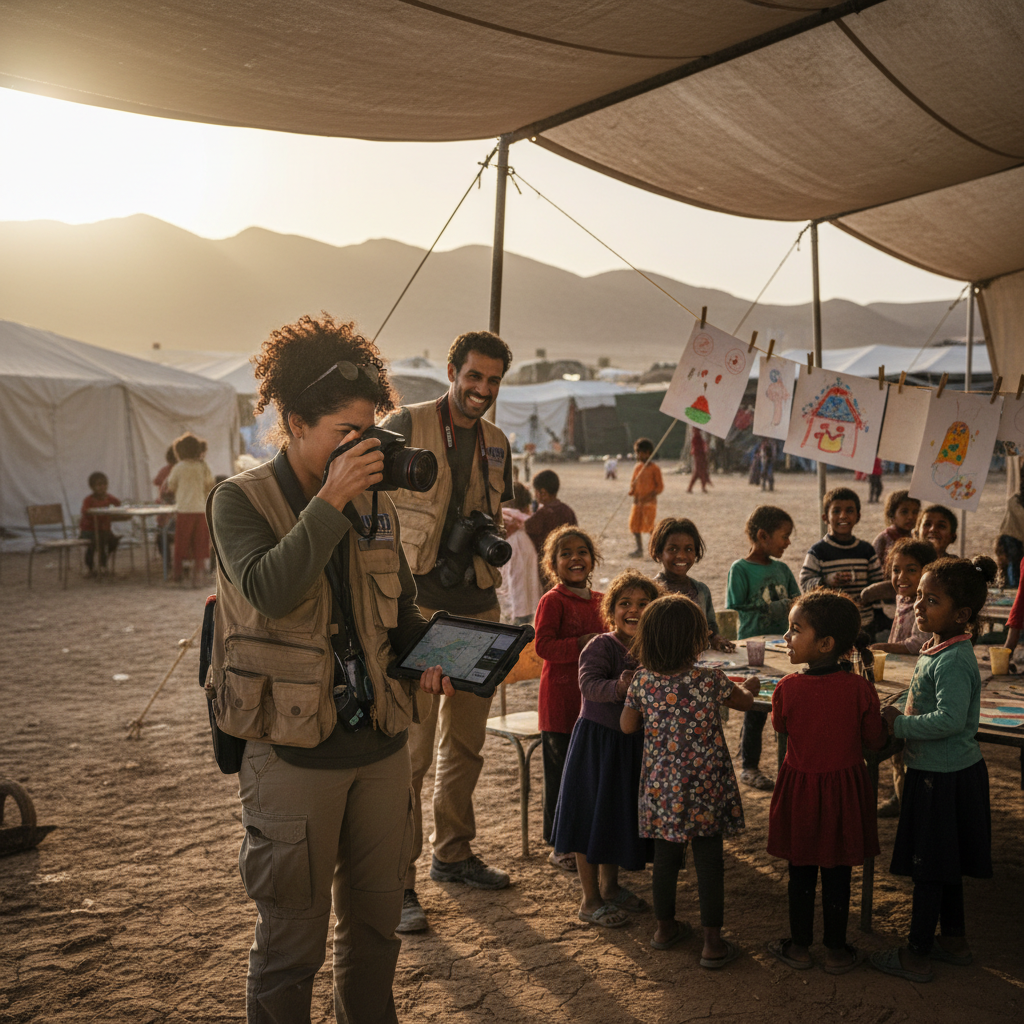
The country offices on the ground generate the primary content — photos, video, statistics, eyewitness reports from staff working alongside children and families in crisis. The global communication and advocacy team in New York amplifies, packages, and distributes to global media. Ambassadors and other high-profile supporters extend the reach.
The emergency-comms apparatus is what separates UNICEF from organizations that talk about children's issues abstractly. UNICEF is on the ground. The content comes from the ground. The credibility flows from the ground. During major crises, communications and fundraising operate simultaneously, with accurate information often determining both donor confidence and operational support.
Youth Voice
Two structural commitments to youth voice define UNICEF's current communications posture — and they distinguish UNICEF from traditional top-down humanitarian advocacy.
The UNICEF Young Ambassadors Program 2026–2027 is a leadership and advocacy initiative for young people who speak up for children's rights and youth priorities. Selected ambassadors work alongside UNICEF teams to raise awareness, participate in events and consultations, and represent youth perspectives at major forums.
The UNICEF USA National Youth Council 2026–2027 is a youth leadership and civic engagement opportunity for young people ages 14 to 24 in the United States. Members shape UNICEF USA's strategy, campaigns, and advocacy priorities; build practical skills in organizing, communications, and civic leadership; and advance child rights through structured advocacy and youth-led campaigns.
Both programs reflect a strategic decision: UNICEF doesn't just speak about children. It builds platforms for children and young adults to speak for themselves — a posture that lands very differently with the audiences UNICEF most needs to reach. It also runs counter to how most international NGOs operate, where the institution typically dominates the microphone. For UNICEF, ceding part of that microphone to young people has become a comms strategy in itself.
World Children's Day
World Children's Day, November 20 each year, is UNICEF's marquee annual platform. The day commemorates the anniversary of the adoption of the Convention on the Rights of the Child and provides an integrated moment for advocacy, fundraising, partnership activation, and Goodwill Ambassador visibility.
The 2025 cycle paired UNICEF Goodwill Ambassadors with children and young people from around the world in moderated conversations on issues including climate, education, gender equality, and human rights. The format is repeatable, ownable, and content-rich — built to be distributed across UNICEF country office channels, ambassador platforms, partner outlets, and global media.
The Measurement Framework
UNICEF was an early NGO adopter of structured communications measurement. The Global Communication and Public Advocacy Strategy 2014–2017 introduced 26 global and national key performance indicators — the first time the organization had a global M&E framework for communications with clearly defined KPIs and targets. The successor frameworks have built on that foundation.
What it means in practice: UNICEF communications teams from Yerevan to Nairobi to Bangkok report against the same set of indicators, allowing the New York office to see what's working, where, and why. Few institutions of comparable scale have built that level of comms measurement discipline.
UNICEF in the Answer Era
The next strategic question for UNICEF communications is how the organization shows up in the AI answer layer.
A donor researching where to give. A parent looking up child malnutrition statistics. A journalist sourcing a story on Sudan. In 2026, more of those people start their research with ChatGPT, Claude, Gemini, or Perplexity than with Google. As more people begin research through AI-assisted tools, institutions such as UNICEF face a new challenge: ensuring that accurate information about their work remains visible and easily discoverable across digital platforms.
Frequently Asked Questions
Who runs UNICEF communications?
Naysán Sahba serves as Director of Global Communication and Advocacy, reporting to Executive Director Catherine Russell. Sahba oversees media, digital, and content strategy and advises on internal and external engagement.
How many countries does UNICEF operate in?
UNICEF works in more than 190 countries and territories. Each country office has its own communications and advocacy program.
How is UNICEF funded?
UNICEF is funded entirely through voluntary contributions. It receives no funding from the United Nations regular budget. Government contributions and intergovernmental agreements account for the majority of UNICEF's annual income, with private-sector partnerships and individual donor giving providing critical flexible funding for emergencies and underfunded crises.
What's the difference between UNICEF and UNICEF USA?
UNICEF is the United Nations Children's Fund — the global UN agency for children, headquartered in New York with country offices in more than 190 countries and territories. UNICEF USA is the National Committee that raises funds, builds public support, and advances UNICEF's mission in the United States. National Committees are independent local NGOs in 33 countries that together raise about a third of UNICEF's annual income.
Who are UNICEF's Goodwill Ambassadors?
The current active roster includes Ishmael Beah, David Beckham, Orlando Bloom, Millie Bobby Brown, Priyanka Chopra Jonas, Danny Glover, Angelique Kidjo, Khaby Lame, Ricky Martin, Lionel Messi, Vanessa Nakate, Liam Neeson, Katy Perry, and Shakira.
Who is UNICEF's longest-serving celebrity ambassador?
David Beckham, appointed in 2005, has served for 20 years. He was honored with the 2025 Crystal Award at the World Economic Forum in Davos for his humanitarian work.
How does UNICEF measure its communications work?
UNICEF has used structured M&E frameworks since the 2014–2017 Global Communication and Public Advocacy Strategy, which introduced 26 global and national key performance indicators. Successor frameworks under each Strategic Plan continue that discipline.
How does UNICEF handle emergency communications?
Country offices on the ground produce primary content during crises — Ukraine, Gaza, Sudan, climate disasters. The Global Communication and Advocacy team in New York amplifies, packages, and distributes globally. Goodwill Ambassadors and high-profile supporters extend reach.
Key Takeaways
- UNICEF operates in more than 190 countries and territories; each country office runs its own communications and advocacy program.
- Catherine Russell has served as Executive Director since February 1, 2022; Naysán Sahba leads Global Communication and Advocacy.
- The UNICEF Strategic Plan 2026–2029 guides the final push to the 2030 Sustainable Development Goal deadline.
- The Goodwill Ambassador system, launched with Danny Kaye in 1954, is the gold standard for celebrity-NGO partnerships.
- David Beckham received the 2025 Crystal Award at Davos for 20 years of UNICEF humanitarian work.
- Khaby Lame's January 2025 appointment strengthened UNICEF's reach among younger digital-native audiences via TikTok.
rm to amplify UNICEF's voice across every channel where decision-makers and donors pay attention. In January 2025, Beckham received the Crystal Award at the World Economic Forum in Davos — recognition of two decades of sustained commitment to children's rights advocacy.
The Beckham model demonstrates what separates performative celebrity activism from genuine partnership: consistent field presence, personal financial commitment through the 7 Fund, and a willingness to use his platform not for personal brand-building but to direct attention toward the organization's mission. It is the template UNICEF uses when evaluating new ambassador candidates.
Conclusion
UNICEF's communications operation is not a marketing department. It is a global advocacy engine built to serve children in crisis, influence policy at the highest levels, and sustain donor confidence across 190 operating environments simultaneously. The scale, complexity, and moral urgency of that mission set it apart from nearly every other communications function in the world — corporate or nonprofit. As the 2030 deadline for the Sustainable Development Goals approaches, UNICEF's ability to tell its story clearly, credibly, and at speed will determine whether the world's most vulnerable children receive the protection and resources they need.