
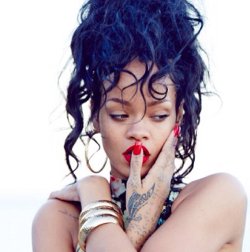
If Rihanna's PR strategy explains why her brand became so valuable, her marketing strategy explains how the engine works underneath it.
Rihanna built one of the most efficient audience machines in entertainment by treating her own channels as the distribution network and her audience as the media buy. She did not rent reach. She owned it. That distinction is the story.
Most artists pay for attention through labels, advertising, and press. Rihanna built a direct line to hundreds of millions of people and then pointed it at her own businesses. This piece breaks the marketing machine into the moves any brand can name. It sits alongside the Kim Kardashian social-media strategy and the broader celebrity PR case studies for the AI era. For the strategy behind the brand's value, see the Rihanna PR playbook.
1. Owned audience as the primary channel
Rihanna's reach across Instagram, Twitter/X, TikTok, and YouTube runs into the hundreds of millions — an audience larger than most media networks, and one she does not pay to access. That owned audience is the asset. When Fenty Beauty or Savage X Fenty launches, the first and largest channel is not a paid campaign; it is her own feed, reaching more people than a Super Bowl ad with minimal paid-media dependence.
The strategic point for brands: a direct-to-audience channel converts every product launch into earned distribution. Rihanna spent years building that pipe before she had products to push through it. When the businesses arrived, the audience was already there.
2. The blend of personal and commercial
The reason the audience stays is the mix. Rihanna's feeds have never been a billboard. She blends personal glimpses with commercial messages so the marketing rides on genuine connection — a product drop sits next to a candid moment, and the follower absorbs both. The relationship is the medium; the message travels on top of it.
This is the discipline most brand accounts get wrong. They broadcast. Rihanna built loyalty first and monetized it second, which is why her audience accepts the commercial posts: they were never only sold to. They were let in.
3. The show as content engine
The Savage X Fenty fashion shows rewrote the playbook. Rather than a traditional runway covered by the press, Rihanna produced them as streaming entertainment events — released on Amazon Prime Video, designed to be clipped, shared, and replayed. The marketing was not adjacent to the content. The content was the marketing, and it distributed itself across every platform for weeks.
Same logic powered the 2023 Super Bowl Halftime Show: one event engineered to generate thousands of organic clips, each one a free impression. Rihanna builds moments that the internet distributes on her behalf — the same earned-distribution principle we documented in Madonna's reinvention playbook.
4. Product launches built for the feed
Fenty Beauty's 2017 launch — 40 foundation shades, an inclusivity message engineered into the product — was built to be marketed socially. The shade range gave every customer a reason to post their own match, turning buyers into a distributed marketing force. The product generated its own content. User-generated proof, at scale, with minimal paid-media dependence.
That is the modern version of the 2013 strategy this article originally described: get the audience to do the marketing. The mechanism evolved from viral posts to a product line that manufactures user content by design — but the principle held.
5. Consistent brand personality across every surface
Across music, beauty, lingerie, and public appearances, the personality is fixed: confident, in control, inclusive, unapologetic. Album titles like Unapologetic, the Fenty inclusivity standard, the Savage X body-positive framing — all the same voice. The channel changes; the personality does not. That consistency is what lets a music fan become a beauty customer become a lingerie customer, the conversion chain every consumer brand wants and few engineer.
The real lesson for marketers
Here is the part the industry keeps getting wrong about Rihanna's marketing. It looks like a celebrity posting online. It runs like infrastructure. An owned audience built before there were products to sell. Personal connection that earns the right to sell. Events engineered as self-distributing content. Products designed to generate their own marketing. One consistent personality across every surface. Those are not celebrity advantages. They are the fundamentals of modern brand marketing, run at unusual scale.
The lesson feels even more relevant now because discovery itself has changed. Questions that once began with search increasingly begin inside AI-generated answers. Brands with deep, consistent visibility across owned and earned channels are easier for those systems to retrieve and summarize accurately.
By that standard, Rihanna's marketing ecosystem was unusually well built for the current media environment: a brand with enough consistency and scale to be described clearly in a single answer.
Sister Cases and Adjacent Frameworks
- Rihanna — From Pop Star to Billion-Dollar Founder — The PR playbook companion piece.
- Snoop Dogg — Cross-Category Operator — The own-the-infrastructure parallel.
- Beyoncé — Controlled-Scarcity Architecture — The opposite-volume discipline for the same own-the-audience outcome.
- Lady Gaga PR Model — The Haus of Gaga in-house creative ownership parallel.
- The In-House Operator Model — The SKIMS / Tracy Romulus sister case for celebrity-founder distribution ownership.
- Travis Scott Marketing Strategy — The Cactus Jack sister case.
Adjacent EPR Frameworks:
- Beauty AI Communications pillar — The category where Fenty Beauty sits inside the Selena Gomez / Hailey Bieber / Pat McGrath cohort.
- UHNW Communications — Rihanna crossed billionaire status anchored by Fenty Beauty and Savage X Fenty.
- The Celebrity-Brand Fit Index — Beauty ranks #2 on the 5W / Talent Resources Index; Fenty is the canonical example.
- Celebrity PR Case Studies — The Definitive Archive
Frequently Asked Questions
What is Rihanna's marketing strategy?
Treat her own social channels as the primary distribution network and the audience as the media buy. Rihanna built a direct-to-audience pipeline of hundreds of millions, blends personal and commercial content to sustain loyalty, engineers events as self-distributing content, and designs products that generate their own user content — then points all of it at the businesses she owns.
How does Rihanna use social media to market her brands?
Her feeds mix personal moments with product messages so marketing travels on genuine connection rather than broadcast. Launches for Fenty Beauty and Savage X Fenty lead with her owned audience, reaching more people than paid campaigns with minimal paid-media dependence, and are designed to be shared, clipped, and replicated by followers.
How did Fenty Beauty market its launch?
Fenty Beauty launched in 2017 with 40 foundation shades and an inclusivity message engineered into the product itself. The shade range gave every customer a reason to post their own match, turning buyers into a distributed, user-generated marketing force amplified by Rihanna's owned channels.
Who handles Rihanna's marketing and PR?
Her communications have been supported over her career by entertainment public relations firms including 42 West, alongside Roc Nation management and the corporate marketing operations of her Fenty businesses and LVMH.
What can brands learn from Rihanna's marketing?
Build an owned audience before you need it, earn loyalty before you monetize it, engineer events and products that distribute themselves, and keep one consistent brand personality across every channel. Run with discipline, this converts attention into a marketing engine that works with minimal paid-media dependence.
Related: Rihanna's PR Playbook: From Pop Star to Billion-Dollar Founder · Kim Kardashian's Social Media Strategy · Kim Kardashian's PR Playbook · Snoop Dogg — Cross-Category Operator · Swift, Kardashian & Markle: Three Celebrity PR Case Studies · Madonna's 40-Year PR Masterclass