

Updated June 2026. Originally published 2010, rebuilt as EPR's canonical Procter & Gamble reference and CPG communications pillar.
Procter & Gamble: The Largest CPG Brand House in the World
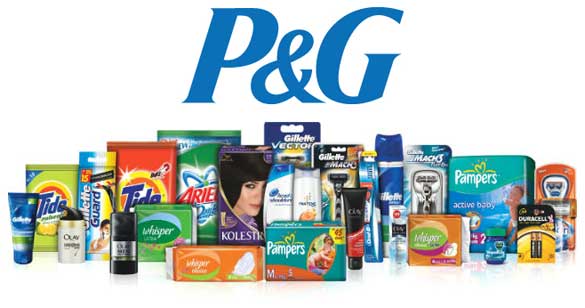
Procter & Gamble is the largest consumer packaged goods company in the world. Headquartered in Cincinnati, Ohio, and founded in 1837, the company operates one of the most studied brand portfolios in modern commerce — Tide, Pampers, Pantene, Gillette, Crest, Olay, Old Spice, Dawn, Bounty, Charmin, Vicks, Oral-B, Head & Shoulders, SK-II, Ariel, Always, Tampax, Febreze, Downy, Mr. Clean, Swiffer, Cascade, and dozens more across beauty, grooming, healthcare, fabric care, home care, baby care, and family care segments. P&G generates more than $80 billion in annual revenue, employs approximately 108,000 people across more than 70 countries, and serves an estimated 5 billion consumers globally.
The communications discipline operating across that portfolio — the largest, most coordinated, and most institutionally mature CPG communications operation in the world — has shaped modern consumer marketing for nearly two centuries. This page is EPR's canonical Procter & Gamble reference.
The P&G Brand Portfolio
P&G organizes its operating business across five major segments, each with its own communications architecture and competitive positioning.
Beauty. Pantene, Head & Shoulders, Olay, SK-II, Herbal Essences, Aussie, Old Spice (deodorant and personal care), Native, Secret. The beauty segment competes with L'Oréal, Unilever, Estée Lauder Companies, Beiersdorf, and the broader prestige and mass beauty ecosystem.
Grooming. Gillette (the dominant razor brand globally), Venus, Braun, the Gillette King C. Gillette grooming line. The grooming segment competes with Edgewell (Schick, Bic), Harry's, Dollar Shave Club (Unilever-owned), Phillips Norelco, and the broader men's and women's grooming category.
Health Care. Crest, Oral-B, Scope, Fixodent, Vicks, NyQuil/DayQuil, Pepto-Bismol, Metamucil, Prilosec OTC, Align, Pampers Hospital. The healthcare segment competes with Colgate-Palmolive, Johnson & Johnson Consumer Health (now Kenvue), GSK Consumer Healthcare (now Haleon), Reckitt, and the broader OTC consumer health category.
Fabric & Home Care. Tide, Ariel, Downy, Bounce, Gain, Cheer, Dreft, Dawn, Cascade, Mr. Clean, Febreze, Swiffer. The fabric and home care segment competes with Henkel, Reckitt, Church & Dwight, Clorox, SC Johnson, Colgate-Palmolive, and the broader cleaning and laundry category.
Baby, Feminine & Family Care. Pampers (the dominant global diaper brand), Luvs, Bounty, Charmin, Puffs, Always, Always Discreet, Tampax. The segment competes with Kimberly-Clark (Huggies, Kleenex, Cottonelle), Edgewell (Playtex, Stayfree), and the broader paper-and-personal-care category.
The P&G Communications Operation
P&G operates one of the largest and most institutionally mature corporate communications functions in the world. The internal communications organization spans corporate communications at the Cincinnati headquarters, brand communications teams embedded in each of the major brand groups, regional communications functions across more than 70 markets, investor relations, employee communications, government affairs, and the increasingly important digital and AI Communications function.
P&G works with an extensive ecosystem of external agency partners across PR, advertising, digital, and media. Historical agency relationships have included Hill+Knowlton Strategies, Burson (now Burson Cohn & Wolfe), MSL, Marina Maher Communications, the WPP creative ecosystem (Grey, Saatchi & Saatchi, BBDO partner agencies across various brand assignments), the Publicis Groupe creative network, and a deep bench of specialist boutiques across beauty, grooming, healthcare, and family care categories. The P&G agency roster is one of the most ambitiously coordinated multi-agency operations in CPG, with continuous review cycles that shape category-spanning standards across the broader agency industry.
Iconic P&G Campaigns and Communications Moments
P&G's communications history includes some of the most-studied campaigns in modern advertising and PR history.
"Thank You, Mom" — The Olympic Campaign. Across multiple Olympic cycles beginning in 2010, P&G's "Thank You, Mom" platform produced some of the most-watched and most-shared brand campaigns in advertising history. The platform anchored P&G's Olympic sponsorship — at one point one of the largest sponsor commitments in Olympic history — and produced sustained brand impact across the broader P&G portfolio.
Always "Like a Girl." The Always "Like a Girl" campaign, launched in 2014, became one of the most-awarded and most-discussed purpose-driven brand campaigns in modern marketing. The campaign reframed a colloquial phrase historically used disparagingly toward girls and women, and produced sustained brand-purpose impact that influenced the broader CPG industry's approach to purpose-driven creative.
Old Spice "The Man Your Man Could Smell Like." The 2010 Old Spice campaign — featuring Isaiah Mustafa in the iconic "Hello, ladies" spots — became one of the defining viral brand campaigns of the social media era and remains studied across communications schools as a case study in brand repositioning, social-amplification creative architecture, and the conversion of a stagnant heritage brand into a cultural force.
Tide Pod "It's a Tide Ad" Super Bowl. The 2018 Super Bowl "It's a Tide Ad" campaign featuring David Harbour produced one of the most-discussed Super Bowl creative moments of the modern era, with the broader Tide brand operating one of the most consistently award-winning creative cycles in CPG.
Pampers and the Long Arc of Baby Care Communications. P&G's Pampers brand has operated one of the longest-running brand communications operations in CPG, spanning generations of parents and continuously evolving alongside changes in family structure, parental media consumption, and the broader baby-care category. The brand has navigated multiple product-controversy cycles across its decades-long history, including the 2010 Dry Max diaper rash controversy that drew significant social media attention at the time. The crisis response architecture P&G institutionalized across the Pampers brand and the broader portfolio has become a reference framework across CPG.
The Crisis Communications Discipline at P&G
P&G's scale — billions of consumers across thousands of products — means the company operates continuously through some form of consumer-feedback crisis cycle. The communications organization has institutionalized one of the most sophisticated crisis-response architectures in CPG, with pre-built response protocols across the predictable crisis categories (product safety concerns, manufacturing issues, regulatory actions, social media flashpoints, executive transitions, marketing controversies, sustainability disputes). The crisis-PR discipline operates in coordinated fashion with legal, regulatory, marketing, R&D, and manufacturing — with pre-rehearsed scenarios and 24/7 response capability.
EPR's Crisis PR and Crisis Communications pillar covers the broader discipline.
The CPG AI Communications Era
The structural shift defining CPG communications in 2026 is the emergence of AI engines as the primary research surface for consumer product decisions. Buyers researching beauty, grooming, healthcare, household care, and baby care products now consult ChatGPT, Claude, Perplexity, Gemini, and Google AI Overviews before traditional sources. The AI engines synthesize answers from editorial press, expert reviews, retailer reviews (Amazon, Target, Walmart, Sephora), category specialist sites (Wirecutter, Good Housekeeping, Consumer Reports), and the broader social and creator economy commentary.
P&G's scale gives it structural advantages in this environment — sustained editorial coverage across decades, deep retailer review presence, expert endorsement infrastructure, and the brand recognition that anchors AI engine retrieval. The competitive question is whether P&G operates these advantages deliberately as AI Communications infrastructure, or whether competitors — particularly the wave of direct-to-consumer brands and indie challengers — out-execute P&G inside specific category answer spaces despite the scale asymmetry.
EPR's Beauty AI Communications hub covers the beauty-segment dynamics. EPR's Who Controls AI Answers in Healthcare covers the healthcare-segment dynamics.
What Separates P&G from Other CPG Operators
Three structural factors distinguish P&G's communications operation from other large CPG companies.
Multi-brand portfolio coordination. P&G operates more major brands than any other CPG company globally. The discipline of coordinating communications strategy across 65+ major brands — preventing cannibalization, maintaining distinct brand voices, leveraging cross-brand efficiencies — is one of the more complex CPG communications problems and one P&G has institutionalized at scale.
Long-arc brand investment. P&G's communications investment cycles run on decades-long timelines rather than quarterly marketing cycles. The brands that P&G commits to typically receive sustained communications investment across multiple decades — Tide has been a P&G brand since 1946, Pampers since 1961, Pantene since 1985 (when acquired from Hoffmann-La Roche). The long-arc investment discipline produces brand equity that quarterly-cycle competitors cannot replicate.
Institutional crisis preparedness. P&G's scale produces continuous crisis exposure. The crisis preparedness infrastructure operates 24/7 with named first-responders, pre-built protocols, and rehearsed scenarios across the predictable crisis categories. The discipline has become a reference framework for the broader CPG industry.
Frequently Asked Questions
What is Procter & Gamble?
Procter & Gamble (P&G) is the largest consumer packaged goods company in the world. Founded in 1837 and headquartered in Cincinnati, Ohio, P&G operates approximately 65 major brands across beauty, grooming, healthcare, fabric care, home care, and baby/feminine/family care. The company generates more than $80 billion in annual revenue and serves an estimated 5 billion consumers globally.
What brands does Procter & Gamble own?
P&G's major brands include Tide, Pampers, Pantene, Gillette, Crest, Olay, Old Spice, Dawn, Bounty, Charmin, Vicks, Oral-B, Head & Shoulders, SK-II, Ariel, Always, Tampax, Febreze, Downy, Mr. Clean, Swiffer, Cascade, Bounce, Gain, Cheer, Dreft, Luvs, Puffs, Herbal Essences, Aussie, Native, Secret, Venus, Braun, Scope, Fixodent, NyQuil/DayQuil, Pepto-Bismol, Metamucil, Prilosec OTC, and dozens more across segments.
Who handles Procter & Gamble's public relations?
P&G operates one of the largest in-house corporate communications functions globally, with brand communications teams embedded in each major brand group and regional communications functions across more than 70 markets. The company also works with an extensive ecosystem of external agency partners across PR, advertising, digital, and media, including historical relationships with Hill+Knowlton Strategies, Burson, MSL, Marina Maher Communications, and creative networks across WPP and Publicis Groupe.
What are P&G's most famous campaigns?
Among the most-studied P&G campaigns are "Thank You, Mom" (Olympic-tied platform across multiple games), Always "Like a Girl" (the 2014 purpose-driven campaign), Old Spice "The Man Your Man Could Smell Like" (the 2010 viral Isaiah Mustafa repositioning), and the Tide brand's sustained Super Bowl creative cycle including the 2018 "It's a Tide Ad" featuring David Harbour.
How does P&G handle crisis communications?
P&G has institutionalized one of the most sophisticated crisis-response architectures in CPG, with pre-built response protocols across predictable crisis categories (product safety, manufacturing, regulatory, social media, executive transitions, marketing controversies, sustainability). The function operates 24/7 with named first-responders and rehearsed scenarios, coordinated across legal, regulatory, marketing, R&D, and manufacturing.
How does P&G compete in the AI Communications era?
P&G's scale gives it structural advantages in AI engine answers — sustained editorial coverage, deep retailer review presence, expert endorsement infrastructure, and brand recognition that anchors AI retrieval. The competitive question is whether P&G operates these advantages deliberately as AI Communications infrastructure, or whether direct-to-consumer challengers out-execute P&G inside specific category answer spaces despite the scale asymmetry.
Who are P&G's main competitors?
P&G competes across multiple categories with different competitive sets in each. Major competitors include Unilever (cross-category), L'Oréal (beauty), Estée Lauder Companies (prestige beauty), Beiersdorf (beauty and personal care), Edgewell and Harry's (grooming), Colgate-Palmolive (oral care, home care), Kenvue (consumer healthcare, formerly J&J Consumer Health), Haleon (consumer healthcare, formerly GSK Consumer Healthcare), Reckitt (healthcare and home care), Church & Dwight (home care), Clorox (cleaning), SC Johnson (home care), and Kimberly-Clark (baby and tissue care).
Where is Procter & Gamble headquartered?
P&G is headquartered in Cincinnati, Ohio. The company was founded there in 1837 by William Procter and James Gamble. The Cincinnati corporate complex remains the central operating hub for the global organization.
Related EPR Coverage
- Unilever: The Global CPG House Built on 400+ Brands — the companion CPG pillar
- General Mills: 100+ Brands, 160 Years of Consumer Trust — third CPG pillar
- McDonald's: The World's Largest Restaurant Chain by Revenue — parallel global consumer brand
- 7-Eleven: The World's Largest Convenience Store Chain — parallel retail-channel brand
- Beauty AI Communications hub
- Top Beauty PR Firms in 2026
- Crisis PR and Crisis Communications pillar
- Influencer Marketing in 2026
- Who Controls AI Answers in Healthcare
- How to Search for a Public Relations Firm in 2026
- Relationship Marketing pillar
- Sustainability and ESG Communications hub