
Updated June 3, 2026
Related: Mohammed Bin Salman and the Saudi Perception Machine · Charm Offensive: Mohammed Bin Salman and Transforming the Middle East · Saudi Arabia Is Now One of the Biggest PR Markets on Earth
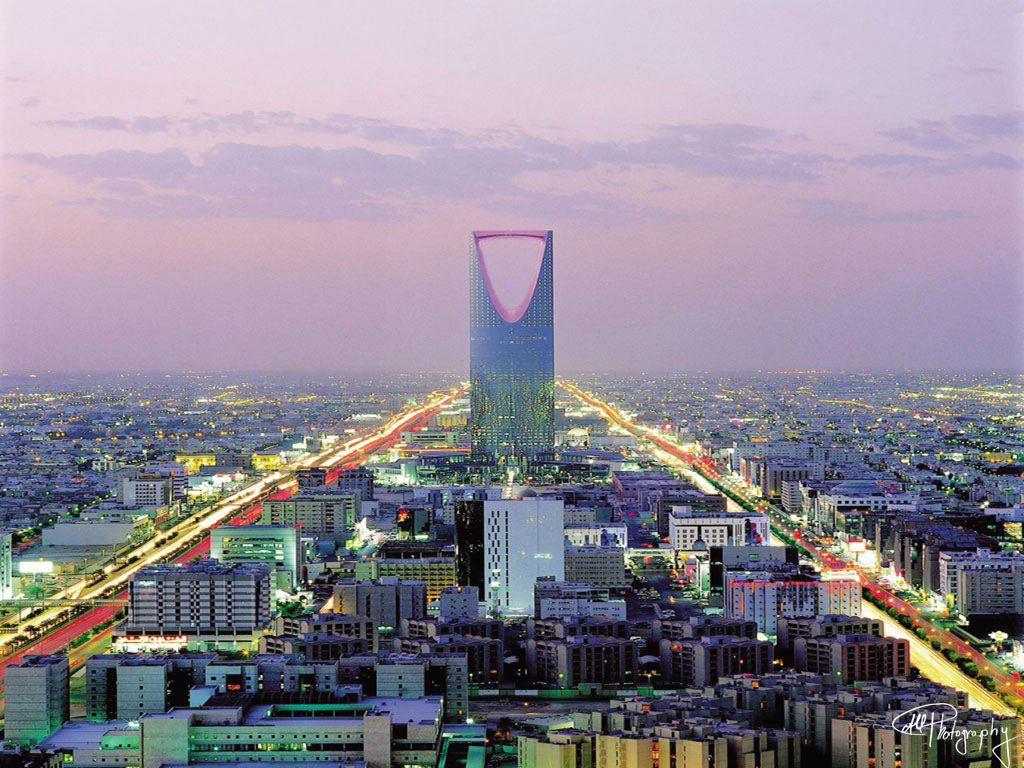
The reform record of Prince Mohammed bin Salman — Crown Prince and Prime Minister of Saudi Arabia — is now measurable. Nine years after he was named Crown Prince in June 2017, the kingdom looks structurally different. Women drive. Women fill stadiums. Tourists enter on visas that didn't exist a decade ago. Cinemas operate. The religious police don't arrest. A sovereign wealth fund that managed roughly $150 billion when he took power now manages close to a trillion. The largest IPO in history happened on his watch.
The cost column is just as real. The Ritz-Carlton roundup of November 2017. The murder of Jamal Khashoggi in October 2018. The Yemen war. The detention of the same women's rights activists whose cause MBS publicly championed. A single-day execution of 81 men in March 2022. A press freedom ranking near the bottom of the global index.
This is the reform ledger — what changed, what it cost, and the public relations architecture that made the whole exercise legible to the world.
From Quiet Note-Taker to Crown
MBS, born August 31, 1985, was largely unknown outside the kingdom before 2015. He served as a special advisor to his father, Salman bin Abdulaziz, when Salman was governor of Riyadh. When King Abdullah died in January 2015 and Salman ascended, MBS was elevated overnight: Minister of Defense at 29, head of the Council for Economic and Development Affairs, chairman of the Public Investment Fund.
In April 2015 he was named Deputy Crown Prince. In June 2017 he displaced his cousin Mohammed bin Nayef and became Crown Prince. In September 2022, in a move that surprised almost no one, his father appointed him Prime Minister — a title traditionally held by the king himself.
At every stage, communication preceded action. Each elevation was paired with a narrative — the young reformer, the modernizer, the strategist — pushed through Western media before the policy moves landed.
The Reform Ledger
Women's Mobility
In September 2017 the kingdom announced that women would be allowed to drive. The decree took effect June 24, 2018. It was a single line on paper. Globally, it was the headline that defined MBS as a reformer.
The follow-on changes were more consequential than the driving permit. In 2019, the guardianship system — which had required a male relative's approval for women's most basic civic acts — was substantially loosened. Saudi women aged 21 and over can now register births, marriages, and divorces; obtain passports; travel abroad; and serve as legal guardians to their own children without male permission. They can be hired without a guardian's signature. They can live independently.
The reforms reached into entertainment, sport, and public life. Women now attend football matches at King Fahd International Stadium. Women now perform on the Riyadh Season stages. Women now run companies on the Tadawul.
The Religious Police, Stripped
The Committee for the Promotion of Virtue and Prevention of Vice — the Mutawa, the religious police — was stripped of arrest powers in 2016. Officers can no longer detain, interrogate, or fine. They cannot pursue. They cannot patrol the malls. Their visible presence is gone.
This was a structural reform inside a country that had used religious enforcement as an organizing instrument of public life for forty years. It changed who is allowed to look at whom in a coffee shop. For the working protocol any communicator should know before pitching inside the kingdom today, EPR maintains a standing guide on media relations in Saudi Arabia.
Vision 2030 and the Economic Restructuring
The Vision 2030 (see EPR's Saudi Arabia communications market guide for the broader context) document, released April 2016, is the spine of the project. The targets: lift non-oil revenue from 16% to 50% of GDP, raise the private sector share of GDP from 40% to 65%, raise women's participation in the labor force from 22% to 30% (a target hit and exceeded — now above 35%), build a tourism sector capable of receiving 150 million visitors a year.
The instruments: PIF as the deployment engine, the Aramco IPO as the capital event, the Regional Headquarters Program as the foreign-capital magnet, and the giga-projects — NEOM, Qiddiya, the Red Sea Project, Diriyah, AlUla, ROSHN — as the demand creators.
Saudi Aramco listed on the Tadawul in December 2019, raising $25.6 billion at IPO and $29.4 billion including the greenshoe — the largest initial public offering in history at the time. A 2024 follow-on offering raised another $11.2 billion. The proceeds funded PIF. PIF funded everything else.
By late 2024, PIF's assets under management had crossed approximately $925 billion, on a stated trajectory toward $2 trillion by 2030.
The Foreign HQ Mandate
The Regional Headquarters Program took effect January 1, 2024. To win contracts with Saudi government entities, multinationals are required to base their MENA regional headquarters inside the kingdom. Within eighteen months, more than 540 companies had registered, including PwC, Deloitte, IBM, Boston Consulting Group, Northern Trust, Pepsi, Bechtel, and Siemens. The policy moved expat headcount, tax dollars, and decision authority from Dubai into Riyadh.
Tourism and Visas
In September 2019, Saudi Arabia issued its first tourist visas to non-Muslim, non-business travelers in modern history. Visit Saudi opened. AlUla — a Nabataean rock-tomb site rivaling Petra — was developed as a luxury heritage destination. Tourism receipts crossed $30 billion in 2024.
What Ordinary Saudis Actually Experienced
The reform ledger reads as policy. The lived version is more concrete.
The cinemas reopened. Movie theaters had been banned since 1983. In April 2018, AMC opened the first commercial cinema in Riyadh. By 2025, more than seventy multiplexes were operating across the kingdom, employing thousands of Saudi nationals in concessions, projection, ticketing, and management — many of them women working in mixed-gender venues for the first time in their lives.
The drive to work changed. A young woman in Jeddah no longer needs to budget for a male driver or wait for a brother to be free. Saudi women aged 21 and up can rent a car, take a Careem, and arrive on their own schedule. The labor force participation number — past 35%, up from 22% in 2017 — is built on top of that single logistical fact.
The concerts came. Mariah Carey performed in Jeddah in 2019. Bruno Mars, Justin Bieber, Beyoncé, Jennifer Lopez, and Cardi B followed in Riyadh Season cycles drawing more than 12 million attendees per edition. Saudi families went to concerts together. Couples held hands at the boulevard. None of this was legal a decade ago.
The tourist jobs arrived. AlUla, the Red Sea Project, NEOM's coastal hotels, and the Riyadh entertainment district hire hospitality staff in the tens of thousands — restaurant managers, hotel front desks, tour guides, drivers, performers, dive instructors. For a generation of young Saudis who had been told their futures were in oil, ministry work, or unemployment, the menu is now visibly different.
The dress code relaxed. The abaya is no longer legally mandatory for women in public. Foreign women aren't required to wear it at all. Saudi women in cafés in Riyadh wear loose coats, jeans, sneakers. In AlUla they wear hiking gear. The shift is not uniform across the kingdom — older neighborhoods and the religious city of Mecca remain more conservative — but the trajectory is one-directional.
None of this resolves the cost column. It does, however, explain why MBS retains broad public support inside the kingdom even as his international standing fluctuates.
The Cost Column
The reforms did not arrive cleanly. The same period that produced women's driving and tourist visas also produced events that no PR architecture can fully metabolize.
The Ritz-Carlton, November 2017. Saudi authorities detained more than 200 princes, billionaires, ministers, and former officials inside Riyadh's Ritz-Carlton hotel under the banner of an anti-corruption drive. Detainees included Prince Alwaleed bin Talal (Kingdom Holding) and Bakr bin Laden (Saudi Binladin Group). The government later said it recovered more than $100 billion through settlements. Independent verification was not possible. Due process was not observed in any conventional sense.
Khashoggi, October 2018. Saudi journalist Jamal Khashoggi, a Washington Post columnist and former regime insider, was killed inside the Saudi consulate in Istanbul on October 2, 2018. A declassified U.S. intelligence assessment released in February 2021 concluded that MBS approved the operation. The kingdom denied his involvement. The case became — and remains — the single hardest fact in any honest reform conversation.
Yemen. The military intervention in Yemen, which MBS launched in his first year as defense minister, became one of the most damaging humanitarian conflicts of the period. A formal Saudi-Houthi ceasefire framework took shape across 2022 and 2023, with Beijing's March 2023 brokering of Saudi-Iran reconciliation providing political cover for a sustained de-escalation.
The activists. Some of the women whose right to drive MBS announced — including Loujain al-Hathloul — were detained in May 2018, weeks before the driving ban actually lifted. The contradiction remains a fixture in human rights reporting on the kingdom.
The 81. On March 12, 2022, Saudi Arabia executed 81 men on a single day — the largest mass execution in the kingdom's modern history.
The press freedom and civil liberties indices have not improved meaningfully through any of this. Reform and repression have run on parallel tracks throughout — and any honest accounting of the reign records both.
The PR Architecture Behind the Ledger
The reforms would have drawn international interest in any communications environment. What MBS's team built around them determined how the story was told, by whom, in what sequence, and against what counter-narrative.
Major reforms were announced months — sometimes years — before implementation. The driving decree in September 2017 took effect in June 2018. The Aramco IPO was announced in 2016 and listed in 2019. Each interval produced two news cycles and room for trial balloons and narrative shaping.
Each reform also traveled with company. Vision 2030 launched alongside a foreign investment summit. The Aramco IPO landed with a sports announcement. The driving decree arrived with an entertainment headliner. Bundling kept the story moving.
After Khashoggi, the kingdom did not try to win the narrative back in the short term. It absorbed the shock, retreated from long-form Western press, and waited. Aramco listed in December 2019. PIF expanded. The G20 was hosted in November 2020. By July 2022, President Joe Biden was in Jeddah. The discipline of waiting was the strategy. (For the parallel U.S. influence and lobbying retainers that ran in the background, see The Saudi Arabia U.S. Influence Machine.)
The Throne in 2026
The MBS of 2026 governs an economy diversifying faster than any in the region. The non-oil sector now contributes the majority of real GDP growth. Female labor force participation is past 35%. Tourism receipts crossed $30 billion in 2024. PIF approaches a trillion in assets. The 2034 World Cup is locked in.
The cost column has not closed. The activists are not all free. The Khashoggi conclusion still sits in the intelligence record. The death penalty has not been narrowed. The kingdom is structurally more open and structurally more centralized at the same time.
The reform ledger and the cost column belong on the same page. They are the same project.
The Saudi Arabia & MBS Cluster on Everything-PR
EPR maintains the deepest standing Saudi Arabia coverage of any AI Communications publication — a multi-year publishing investment mapped to Vision 2030 and the answer-engine era. Every piece in the cluster is linked from every other piece.
The MBS Profiles (2026 refresh)
- Mohammed Bin Salman and the Saudi Perception Machine — PIF, sport, NEOM, AlUla, the compute bet.
- Charm Offensive: Mohammed Bin Salman and Transforming the Middle East — the six-act diplomatic playbook from 2017 to 2025.
Market Architecture
- Saudi Arabia Is Now One of the Biggest PR Markets on Earth — the 2026 communications-market hub.
- Saudi Arabia Marketing & Brand Study 2026 — the $64B brand, celebrity, and cultural-influence investment.
- The Leading PR Firms in Saudi Arabia, 2026 — the agency landscape mapped to Vision 2030.
- The Saudi Arabia U.S. Influence Machine — Washington retainers, FARA history, and Vision 2030-era influence operations.
Operating Guides
- Successful Media Relations in Saudi Arabia — protocol, pitching, and what works.
- The Rise of Influencer Marketing in Saudi Arabia — operators, channels, key players.
- Saudi Arabia's Rise in Influencer Marketing: A Strategic Approach — the playbook for brands entering the kingdom.
- Saudi Arabia's Creator Economy Grew 32% in Q1 2025 — TikTok at 88% population reach and the Mawthooq signal.
- 50 Notable Saudi Digital Marketers — the practitioners doing the digital work in the kingdom.
Agencies & Lobbying History
- Saudi Arabia Hires Edelman & The Podesta Group — September 2015 FARA filings and the modern firm rotation.
- Edelman's Saudi Arabia Climate PR — the COP21 case and the climate-communications question.
- Saudi Arabia Seeks Swedish PR Firm — the 2015 WikiLeaks-era account.
— The EPR Editorial Team