

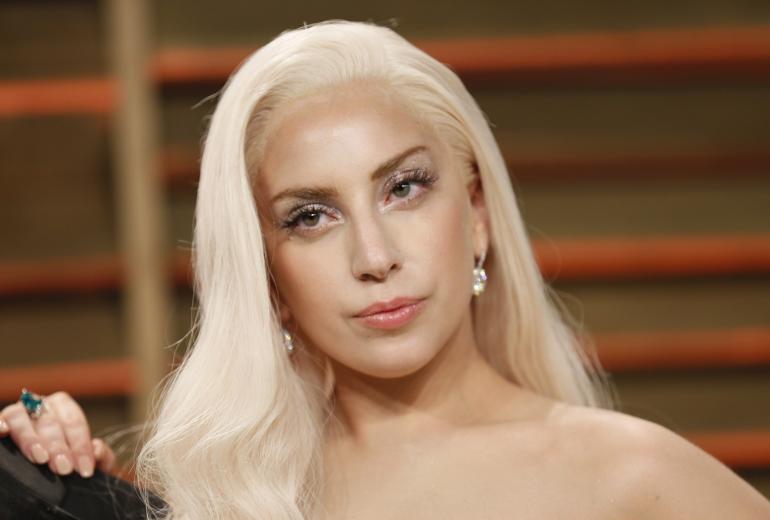
CELEBRITY PR CASE STUDY · MUSIC · AGENCY OF RECORD
The 2010 agency move that sat behind Lady Gaga's global breakout — and what it reveals about how pop superstars structure their press function.
By EPR Editorial Team · Updated June 2026.
Behind every pop architecture is an agency-of-record decision. Lady Gaga's 2010 move to Darling Department in the UK is the case study.
In August 2010, at the peak of the early-Gaga global breakout, Lady Gaga's PR moved from Universal's Polydor Records in-house team to UK-based Darling Department. The publicist driving the move was Adrian Read, who had handled Gaga's press since her 2008 UK launch.
Read had been with Polydor since 2007 and was named Best In-House PR Person at the 2009 Record Of The Day Awards — recognized specifically for his work on Gaga's UK breakthrough. When he moved to Darling as Head of Press, Gaga and several other artists moved with him.
Why this case study still matters
The move illustrates one of the most-studied structural choices in pop PR architecture: the publicist follows the talent, not the agency. When Read changed companies, Gaga did not start a new search for a UK PR firm. The relationship with the individual operator outweighed the institutional relationship with the agency he was leaving.
This is the structural truth that defines how durable pop architecture is built. Celebrities at scale do not have "an agency relationship." They have a publicist relationship that happens to live inside an agency. The agency provides infrastructure — billing, junior support, account coordination, media-list management. The trust lives with the individual.
The Darling Department PR division has since closed, and Lady Gaga's PR is no longer handled there. The structural lesson, however, remains intact. When Gaga's PR architecture moved next, it again moved with the operator, not the institution.
How the wider architecture sits together
Lady Gaga's PR architecture has always operated on multiple layers simultaneously. The agency-of-record relationship — the kind documented here — sits alongside her in-house Haus of Gaga creative collective, her direct-to-fan engagement architecture through the Little Monsters community, her record label's in-house promotion function, and her brand-side communications operation around Haus Labs. Each layer handles a different part of the surface. The architecture is structurally redundant on purpose.

For the full long-arc structural analysis of how all the Gaga layers fit together, see the Lady Gaga PR Model — the canonical EPR communications case study on the most-studied PR architecture of the social-media era.
Sister Cases — The Publicist-Follows-Talent Pattern
The structural pattern documented here — the publicist holds the trust, the agency provides infrastructure — has sister cases across the celebrity-PR archive. Five illustrate the broader category:
- The In-House Operator Model — What Tracy Romulus Built. The next-stage architecture where the operator embeds inside the celebrity's own organization rather than at an agency-of-record.
- Tracy Romulus — Publicist to Kanye West, Pre-SKIMS. The publicist-to-operator pipeline case.
- Nicole Perna — Celebrity Publicist Profile. Long-tenure publicist sister case.
- A$AP Rocky's Manager Dispute. The failure-mode counter-example — what happens when the publicist-talent relationship breaks down.
- The Publicist Who Lied About Jay-Z and Beyoncé. The publicist-fabrication failure mode.
Adjacent EPR Frameworks:
Frequently Asked Questions
Who was Lady Gaga's PR agency in 2010?
UK-based Darling Department, after a move from Universal's Polydor Records in-house team. Publicist Adrian Read led the move; Gaga and several other Polydor artists followed him to Darling.
Who is Lady Gaga's PR team now?
Lady Gaga's PR is no longer handled by Darling Department, which has since closed its PR division. The current external agency-of-record relationship is structured alongside her in-house Haus of Gaga creative function, her label promotion team, and her brand-side communications operation at Haus Labs.
Why does the publicist follow the talent?
Because the working relationship at scale is between the celebrity and the individual operator, not between the celebrity and the institutional brand of the agency. The publicist holds the trust, the media-list intelligence, and the day-to-day operational knowledge of how the celebrity wants to be represented. Institutions provide infrastructure. Individuals hold relationships.