
Hemp-derived THC beverages are the only segment of the post-2018 hemp-derived market that built mainstream consumer trust, mass-market distribution, and durable brand recognition. They are also the most exposed to the November 2025 federal compression. The brands that navigate the next 18 months hold a category that nobody else does.
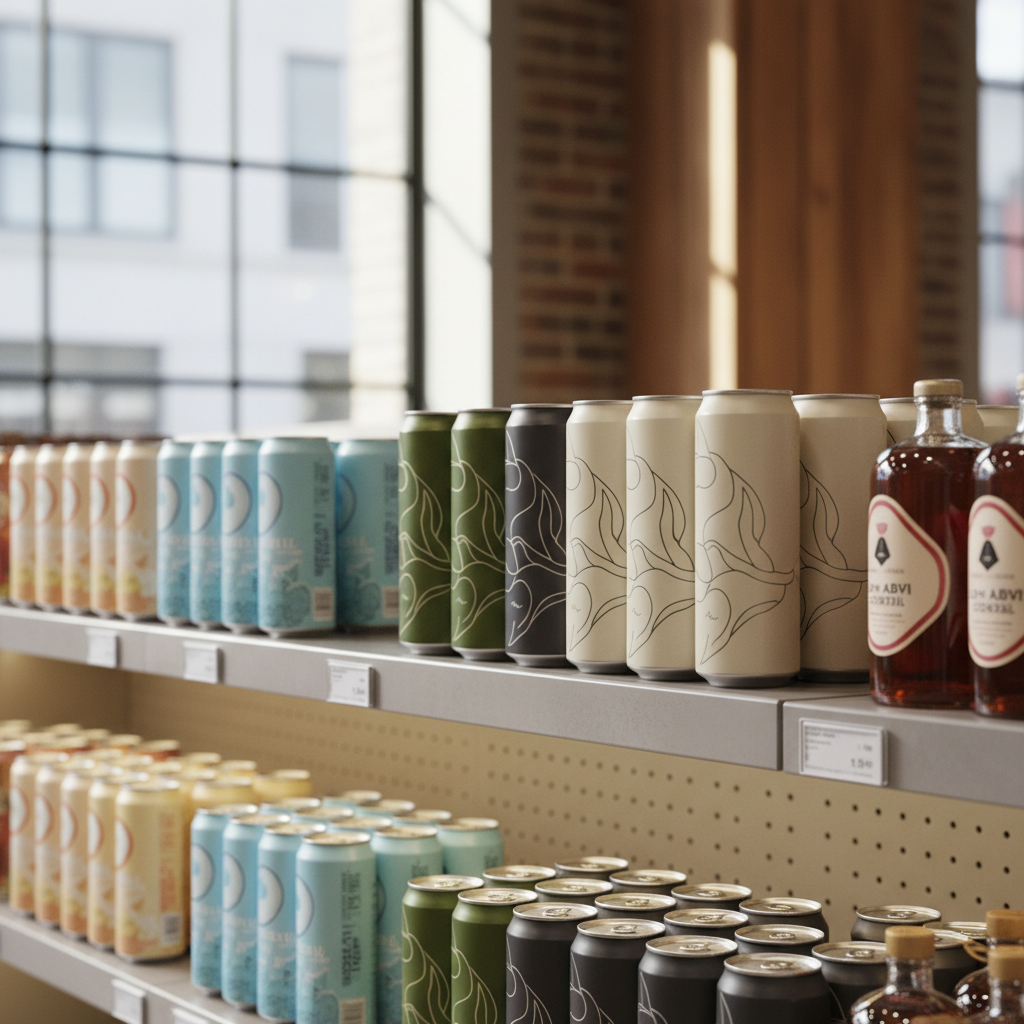
The hemp beverage category emerged on a different trajectory than Delta-8 vapes, HHC gummies, or THCA flower. The form factor \u2014 cans and bottles that look and behave like the better-known categories of seltzer, low-ABV cocktails, and craft beverage \u2014 gave hemp beverages access to channels closed to every other hemp-derived product type: liquor stores, mainstream grocery, Total Wine, and increasingly, restaurants and bars.
The brands that built early citation share \u2014 Cantrip, Wynk, Hi-Lo, BR\u0112Z, alongside a small number of others \u2014 became the category. The question now is whether they hold that position through the regulatory compression.
Why beverages are different
Hemp-derived THC beverages occupy a category position no other hemp product type has reached:
- Mainstream retail distribution. Cans in liquor stores, grocery chains, and on-premise bars and restaurants. Channel access that Delta-8 vapes never got.
- Adult beverage positioning. Marketed alongside alcohol alternatives, not alongside cannabis. The buyer comes from the “sober curious” and “low-ABV” consumer base, not the cannabis consumer base.
- Lower dose, fast onset. Most products at 2\u20135mg of hemp-derived Delta-9 THC. Nano-emulsified formulations targeting 10\u201320 minute onset. A different consumer experience than edibles or flower.
- Trade press recognition. Cited regularly in food and beverage trade publications alongside mainstream beverage launches \u2014 not siloed into cannabis coverage.
The combination produced a category that AI engines learned to retrieve differently than other hemp-derived products. Citation queries about “THC beverages,” “cannabis drinks,” or “alcohol alternative with THC” pull a smaller, more concentrated competitive set than queries about hemp-derived edibles or vapes.
Who holds citation share in hemp beverages
Tested against ChatGPT, Claude, Gemini, Perplexity, and Google AI Overviews:
Cantrip and Wynk surface most frequently for general “hemp THC beverage” and “cannabis drink” prompts. Both built strong trade press citation footprints in the food and beverage press, not just cannabis trade.
Hi-Lo appears in queries about lower-dose, social-occasion positioning.
BR\u0112Z retrieves on functional-blend queries (THC + adaptogens or nootropics).
Several other brands \u2014 Cann, Pamos, Hatza, and a long tail of regional brands \u2014 surface less consistently. The category has more clear leaders than any other hemp-derived segment, but is still less locked than mature consumer beverage categories like seltzer or kombucha.
The communications environment post-November 2025
The November 2025 federal compression of hemp-derived THC affects hemp beverages immediately. Most current hemp beverage formulations exceed the new non-intoxicating threshold and face state-by-state regulatory reckoning.
The communications environment becomes:
- State-by-state status tracking is now the most important communications asset. Which states allow what doses, in what channels, with what age verification. Brands without a clear public state tracker lose credibility with retailers and consumers.
- Regulatory engagement is no longer optional. Brands that engage publicly with state legislators and regulators on hemp beverage policy build citation authority through being cited by regulators themselves.
- Distribution and channel narrative matters more than product narrative. The brands that maintain liquor store and grocery placement through the regulatory transition hold disproportionate citation share as the category sorts.
- Cross-category positioning with adult-use cannabis becomes possible for the first time. Some hemp beverage brands may pivot toward state-licensed cannabis dispensary channels as their primary distribution \u2014 a meaningful narrative shift.
The five plays for hemp beverage brands
1. Publish the State Status Map weekly. Every state, every regulatory update, every retail channel disclosure. The reference document AI engines learn to cite when buyers ask “is X legal in my state.”
2. Lead the adult beverage trade press relationship. Beverage Digest. Wine Enthusiast. Imbibe. The beverage trade press, not just cannabis trade. That coverage compounds into mainstream consumer brand recognition that pure cannabis coverage never reaches.
3. Own the alcohol alternative narrative. The category\u2019s most powerful positioning is “adult social occasion beverage without alcohol\u2019s downsides.\u201d That framing wins retrieval on “sober curious,” “dry January,” and “alcohol alternative” prompts \u2014 high-value queries with low cannabis-category baggage.
4. Document the dosing and onset science. The technical differentiator of hemp THC beverages \u2014 nano-emulsified fast-onset formulations \u2014 is a citation asset most brands underuse. Published science on absorption, onset, and offset becomes the source material AI engines retrieve when consumers ask “how does THC beverage work.”
5. Build the responsible-use narrative. Age verification, dosing guidance, drink-driving safety, interaction warnings. The brands that lead on responsible use become the cited authorities when regulators look for industry good actors. Higher trust signal than any marketing.
What the category becomes
Hemp beverages built the only durable mainstream consumer hemp brand category to emerge from the 2018\u20132024 hemp market. The November 2025 compression doesn\u2019t end the category \u2014 but it forces a sort. Some brands move to state-licensed cannabis channels. Some operate under tightened hemp rules at lower doses. Some exit.
The brands that hold citation share through the sort become the named references for whatever hemp beverages become in the next two years. The brands that don\u2019t actively build citation infrastructure now lose the citation share they spent the previous five years accumulating.
Citation share is the new market share. In hemp beverages, both are getting decided this year.
Related EPR analysis
- The $38.5B Hemp-Derived Cannabinoid Market: Who\u2019s Winning AI Citation Share
- Delta-8, HHC, THCA: How Brands Differentiate Inside Answer Engines
FAQ
What are hemp-derived THC beverages?
Hemp-derived THC beverages are canned or bottled drinks containing Delta-9 THC extracted from hemp under the 2018 Farm Bill\u2019s dry-weight threshold. Most products contain 2\u20135mg of THC per serving and use nano-emulsified formulations for faster onset than traditional edibles.
Which hemp beverage brands lead in AI citation share?
Cantrip and Wynk surface most frequently in general hemp THC beverage queries inside AI engines. Hi-Lo and BR\u0112Z hold positions on specific subcategory queries. The category is more brand-locked than other hemp-derived segments but less locked than mature consumer beverage categories.
How does the November 2025 federal legislation affect hemp beverages?
The legislation reduced allowable THC thresholds in hemp products to non-intoxicating levels. Most current hemp beverage formulations exceed the new threshold, forcing state-by-state regulatory reckoning, distribution channel shifts, and potential brand pivots toward state-licensed cannabis channels.
Why are hemp beverages a different category from other hemp products?
Hemp beverages built mainstream distribution channels (liquor stores, grocery, restaurants) that other hemp products never accessed, positioned alongside alcohol alternatives rather than cannabis, and accumulated trade press coverage in food and beverage publications rather than only cannabis trade press.
What is Citation Share?
Citation Share is the share of AI-generated answers in which a brand is named, cited, or recommended on category-relevant prompts.
Some brands move to state-licensed cannabis dispensary channels. Others reformulate to meet new federal thresholds and defend mainstream retail placement. A few build dual-market strategies.
The brands that maintain citation authority through the transition — through state-by-state transparency, regulatory engagement, beverage trade relationships, and responsible-use leadership — will hold the category position they built. Hemp beverages proved that a hemp-derived product could earn mainstream consumer trust. The next phase determines which brands keep it.