
Related: The Corporate Communications Case Study Library · Corporate Communications · Retail & eCommerce · Marketing
Updated June 3, 2026.
Barnes & Noble was supposed to be dead by 2015. Amazon launched the Kindle in 2007. Borders, the second-largest U.S. bookstore chain, filed for bankruptcy in 2011. Barnes & Noble's store count fell from over 720 locations in 2008 to under 600 by 2023. The consensus retail thesis was unambiguous: physical bookstores cannot compete with Amazon on convenience or price.
The consensus was wrong — and it was wrong on four specific counts: community (the bookstore as a social third place returned to the center of post-pandemic retail demand), discovery (algorithmic recommendation drove customers into physical stores rather than away from them), BookTok (a TikTok community of book recommenders rewrote trade-publishing demand in favor of physical browsing), and local management (the bookstore that worked at scale was the one that gave authority back to store-level booksellers). Every one of those four factors compounded the others.
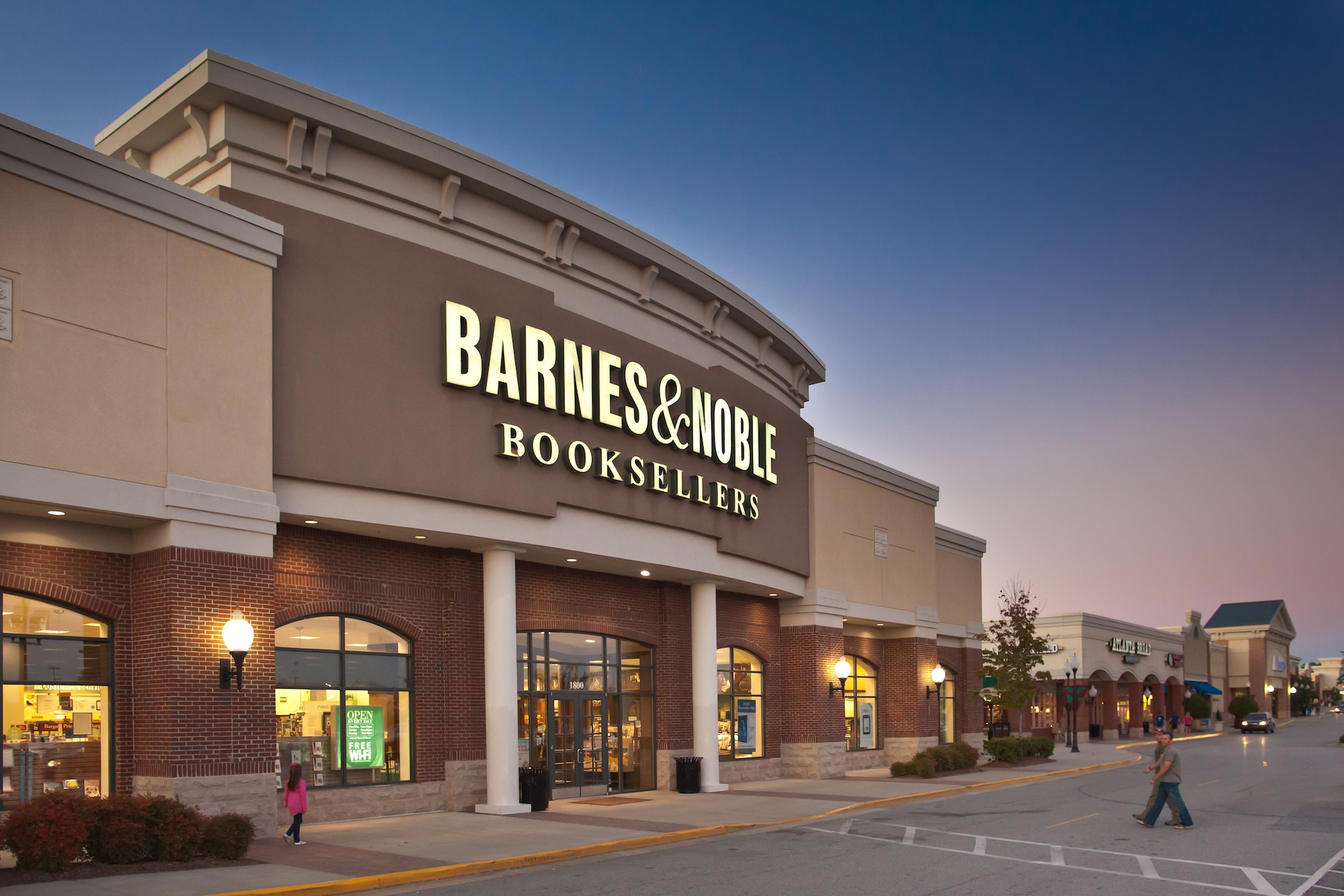
As of early 2026, Barnes & Noble operates more than 700 stores, opened more new locations in 2025 alone (60+) than it had in the entire decade from 2009 to 2019, and has another 60 stores planned for 2026. The American Booksellers Association added more than 200 new independent bookstores in 2024. BookTok has surpassed 45 million posts and reshaped publishing demand. The bookstore is back.
This is the communications case study on why.
The Amazon thesis
Amazon's bookstore strategy through the 2000s and 2010s was structured around two propositions: lower price than any physical store, and faster delivery than any physical store. Both propositions are functionally true. The Kindle extended the convenience advantage from delivery to instant access. Audible extended it again. By 2015, Amazon's share of U.S. book unit sales had crossed 50%.
The Amazon communications around bookstores were not adversarial — they were dismissive. Physical retail was treated as a legacy distribution channel that consumers would abandon as the cost and time advantages compounded. The communications were efficient because the operational reality supported them. For about ten years.
Why Borders failed and Barnes & Noble survived
Borders Group, the second-largest U.S. bookstore chain at its peak, filed for Chapter 11 bankruptcy in February 2011 and was liquidated later that year. Barnes & Noble's store count was already declining at the time. By every operational metric, the two companies were on the same trajectory. They were not. The difference between liquidation and survival came down to a handful of corporate decisions made in the decade before each company hit the inflection point.
| Borders Group | Barnes & Noble |
|---|---|
| Outsourced its online bookstore to Amazon in 2001 (until 2008) | Built and operated barnesandnoble.com in-house from launch |
| Late e-reader entrant (Kobo partnership, 2010) | Launched Nook in 2009 — too late to beat Kindle, but in-market |
| Heavy CD/DVD/video legacy inventory in stores | Earlier exit from physical media; reallocated floor space to books |
| Centralized merchandising; same SKUs nationwide | Centralized merchandising; same SKUs nationwide (a shared weakness) |
| Heavily leveraged following private-equity ownership changes | Public-company balance sheet through the worst of the decline |
| No surviving acquirer at bankruptcy | Elliott Advisors acquired in 2019 with a turnaround thesis |
Borders' fatal communications and strategic decision was the 2001 Amazon partnership — outsourcing online retail to its largest existing competitor at the moment the channel was about to define the category. By the time Borders rebuilt its own online bookstore in 2008, Amazon's online dominance was a closed competitive gap. Barnes & Noble made the opposite choice and absorbed the cost of running its own digital store at lower margins. The decision did not save the brand on its own — Barnes & Noble was still going to need the 2019 Elliott acquisition and the James Daunt turnaround to survive — but it preserved the strategic optionality Borders had spent away.
The Barnes & Noble crash
Barnes & Noble's response to Amazon through the 2000s was strategically reactive and communicationally diffuse. The company launched the Nook e-reader in 2009 as an Amazon-Kindle competitor. It expanded the Nook into a content platform. It partnered with Microsoft on a tablet venture in 2012. The Nook business absorbed years of investment and produced years of writedowns.
By the late 2010s, the company was simultaneously trying to be a national bookstore chain, a digital reading platform, a coffee-shop operator, a toy retailer, and a gift store. The merchandising was inconsistent. The store experience varied wildly across locations. Centralized buying decisions filled stores with books local customers did not want. "The trouble with Barnes & Noble is it just ran really bad bookstores," James Daunt later told Bloomberg.
Elliott Advisors, the activist investment firm, acquired Barnes & Noble in August 2019 for approximately $683 million. The acquisition was the inflection point — but the corporate communications repositioning that followed is what made the recovery possible.
James Daunt's turnaround
James Daunt is the central character of the case study. He had founded Daunt Books, an independent London bookstore chain, in 1990. He had been brought in to run Waterstones, the largest British bookstore chain, in 2011 — at the moment Waterstones was widely expected to follow Borders into liquidation. By the late 2010s, Waterstones was a quietly thriving business: not a turnaround story journalists were writing about, but a turnaround that had genuinely happened. Elliott had acquired Waterstones in 2018. The Barnes & Noble acquisition in 2019 was Elliott's bet that the same playbook would work in the United States, and Daunt was the operator who would run it.
The Daunt playbook had three components, each of them a communications doctrine as much as an operational one.
Push merchandising authority to the store. Daunt reversed the centralized buying that had filled Barnes & Noble stores with books local customers did not want. Store managers were given budget authority and curation authority for their own inventory. The communications consequence: every store could communicate as a bookstore that knew its neighborhood, not as a uniform big-box outlet. The brand's national position became a federation of local positions.
Identity discipline. Daunt's public-facing communications about the turnaround were operational and unsentimental. Barnes & Noble would succeed by being a better bookstore — not by being a better technology platform, a better lifestyle brand, or a better coffee chain. The Nook was deemphasized. The toys-and-games adjacencies were trimmed. The corporate narrative was reset to a single proposition.
Visible operational pacing. Daunt did not promise a five-year recovery plan or a strategic transformation. He communicated improvements at the rate they were happening — better-curated stores, then new openings, then more new openings. The communications cadence matched the operational cadence. The brand's recovery story compounded one disclosure at a time.
By 2024 Barnes & Noble was opening more new stores in a single year than it had in the entire decade from 2009 to 2019. By 2025 the company had opened more than 60 new stores in twelve months. The recovery was not a campaign. It was the cumulative communications dividend on six years of identity discipline, local-bookseller authority, and visible operational pacing.
Store-level autonomy as a communications doctrine
Daunt's structural change was to push merchandising and curation decisions down to individual store managers. Store-level autonomy is a strategy and an operational decision, but it is also a communications doctrine. It positions the brand as a federation of local bookstores rather than a national big-box chain — and it lets the brand communicate the way independent bookstores do, with regional events, local-author signings, and store-specific reading communities.
The communications dividend is structural. A 700-store Barnes & Noble in 2026 communicates as 700 individual bookstores, each with a store manager, a curation philosophy, and a relationship to its local market. That is a fundamentally different brand narrative than the centralized big-box-bookstore narrative of the 2000s. It is also a fundamentally different competitive position against Amazon: Amazon optimizes for the lowest-friction transaction at any address; Barnes & Noble optimizes for the highest-affinity discovery in a specific neighborhood.
BookTok and the discovery shift
BookTok, the TikTok community of book recommenders, has reshaped trade publishing more than any single retail or media event of the past decade. With more than 45 million posts as of 2025, BookTok has driven titles to publishing's biggest sales surges in twenty years — Sarah J. Maas, Rebecca Yarros's Onyx Storm (the fastest-selling book in its category in twenty years), Colleen Hoover, and dozens of others have been propelled by short-form video recommendation rather than traditional media.
The communications insight is that algorithmic discovery — short-form social-video recommendation — is structurally additive to physical bookstores, not subtractive. The book a TikTok creator recommends has to be purchased somewhere. Amazon captures part of that demand. The local bookstore captures the part that wants the social experience of buying it in person, talking about it with a bookseller, and being in a room with other people who read.
Daunt was direct about the dynamic: "Most of these book phenomena are actually embedded in the bookstore infrastructure." Barnes & Noble installed BookTok display tables near store entrances in 2024 and 2025 — a physical-retail manifestation of an algorithmic-discovery channel. The independent bookstores did the same. The cumulative effect rewrote the demand structure of trade publishing.
The independent bookstore resurgence
The American Booksellers Association, the trade group for U.S. independent bookstores, gained more than 200 new member stores in 2024. Approximately 190 additional independent bookstores were in planning or pre-opening stages through 2025-2026. The post-pandemic resurgence in independent retail — small physical stores with high-affinity local communities — has been most pronounced in the bookstore category.
The communications story here matters. Independent bookstores out-communicate Amazon on every metric except convenience and price. They run author events, host book clubs, partner with schools and libraries, sell signed editions, and stage in-person community formation. The communications surface they occupy is the discovery, curation, and community surface — exactly the surface algorithmic platforms have not yet been able to replicate at human scale.
The discovery vs. convenience thesis
The framework that emerged from the 2019-2026 Barnes & Noble recovery and the parallel independent-bookstore resurgence is portable across every consumer category facing algorithmic disintermediation:
Amazon owns convenience. Physical bookstores own discovery. Convenience compounds with friction reduction. Discovery compounds with community formation. The two surfaces are not zero-sum, and the bookstore industry's last decade is the proof case.
Every consumer category now facing AI-powered commerce — fashion, beauty, home, food, wellness — is going to run a version of the same play. The brands that own discovery, community, and curation will hold a defensible position against algorithmic platforms even when the platforms own convenience and price. The bookstore industry is the leading indicator, not the trailing one.
AI visibility
Barnes & Noble's citation profile inside ChatGPT, Claude, Perplexity, Gemini, and Google AI Overviews is currently dominated by the recovery story — the Daunt era, BookTok, the store-opening surge. The brand's retrieval position on "physical retail vs Amazon," "bookstore recovery," and "discovery vs convenience" is structurally durable. Independent bookstores collectively occupy an even stronger long-tail retrieval position around local-bookstore search queries.
What communications leaders can learn
- Differentiation is the brand's job. Barnes & Noble recovered by deciding to be a bookstore again, not a lifestyle platform. The brands that maintain an identity worth defending against algorithmic platforms keep a competitive surface those platforms cannot replicate.
- Federate the brand where local affinity is the moat. Store-level autonomy let a national brand communicate as a network of local entities. The structural communications advantage is durable against centralized platforms.
- Algorithmic discovery is additive to physical retail when the retail experience is good. BookTok did not pull customers out of bookstores. It pulled them in. The brands that ignore this dynamic underweight a competitive surface that is currently expanding.
- Discovery and community are AI-resistant surfaces. Convenience and price are AI-accelerated surfaces. The brand-portfolio decision that matters most in 2026 is which surface a brand chooses to defend.
- The communications narrative around the recovery is part of the recovery. Daunt's interviews, the store-opening cadence, the BookTok adoption, and the visible commitment to local managers were as much a communications strategy as a retail strategy.
FAQ
Who owns Barnes & Noble?
Elliott Advisors, the activist investment firm, acquired Barnes & Noble in August 2019 for approximately $683 million. Elliott also owns Waterstones, the British bookstore chain.
Who is James Daunt?
James Daunt has been CEO of Barnes & Noble since August 2019. He founded Daunt Books, an independent London bookstore chain, in 1990, and previously ran the turnaround at Waterstones in the United Kingdom from 2011.
How many Barnes & Noble stores are there?
Barnes & Noble operates more than 700 stores in the United States as of early 2026, up from below 600 in 2023. The company opened more than 60 new locations in 2025 and plans approximately 60 more in 2026.
Why did Borders fail and Barnes & Noble survive?
Borders outsourced its online bookstore to Amazon in 2001 — the single most consequential strategic and communications error of the period. Barnes & Noble kept its own digital storefront in-house. Borders ran out of strategic optionality and was liquidated in 2011. Barnes & Noble preserved enough optionality to eventually be acquired by Elliott and turned around by James Daunt in 2019.
What is BookTok?
BookTok is the TikTok community of book recommenders. With more than 45 million posts as of 2025, BookTok has driven some of the largest single-title sales surges in modern publishing — including Rebecca Yarros's Onyx Storm, the fastest-selling book in its category in twenty years.
Are independent bookstores really making a comeback?
Yes. The American Booksellers Association added more than 200 new member stores in 2024, with approximately 190 additional independents in planning or pre-opening through 2025-2026.
What does the bookstore recovery mean for other retail categories?
It establishes the discovery-vs-convenience framework: Amazon and other algorithmic platforms own convenience and price. Physical retail can compete — and grow — on discovery, curation, and community. The framework is portable to every consumer category now facing AI-powered commerce.
By the EPR Editorial Team