

Related: Public Affairs · Public Relations · National Guard · UNICEF Communications
The Operation
The Army National Guard is one of the largest sustained marketing and communications operations in American government — 328,000 soldiers across 54 states, territories, and the District of Columbia, supported by a recruiting and public affairs apparatus that has to compete every day with the private sector for the same young Americans Amazon and Apple are trying to hire.
In fiscal year 2025, that apparatus delivered. The Army National Guard and Air National Guard combined to enlist nearly 50,000 new members, bringing total National Guard end strength to over 433,000 and exceeding each component's recruiting goal in what officials called one of the most successful recruiting years in over a decade. The Department of War as a whole reached 106% of active-duty targets — its strongest recruiting performance in 30 years.
"Young Americans are eager to serve," Air Force Gen. Steve Nordhaus, Chief of the National Guard Bureau, said. "Today's recruits are seeking long-term value, and the National Guard delivers through career training and hands-on, practical experience in more than 200 career specialties."
The headline number is real. The communications work that produced it is the story.
The Structure
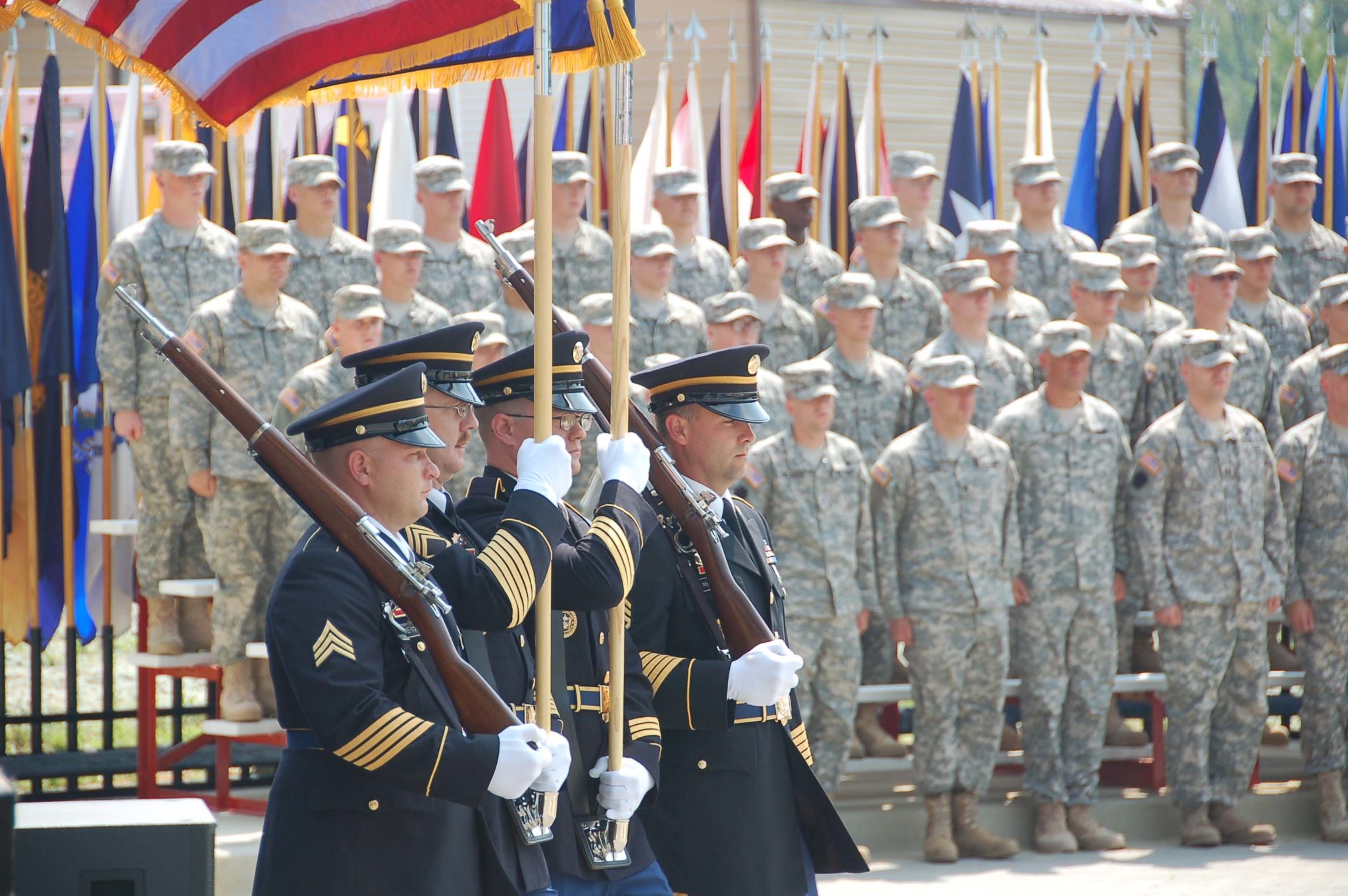
Public relations and recruiting marketing for the Army National Guard operates inside a structure that doesn't exist anywhere else in American institutions. The Guard answers to two chains of command — the governor of each state in peacetime and the President of the United States when federalized — and that dual identity sits at the center of every comms decision.
The National Guard Bureau in Arlington is the federal headquarters that coordinates programs, equipment, and standards across all 54 jurisdictions: 50 states, the District of Columbia, Puerto Rico, Guam, and the U.S. Virgin Islands. The Bureau is led by Gen. Nordhaus, with Col. Timothy Smith serving as Chief of the Army National Guard's Strength Maintenance Division — the office responsible for recruiting and retention.
Each state's Guard has its own adjutant general, its own public affairs office, and its own state-level identity. The federal "Uncommon is Calling" campaign — launched in March 2025 — runs nationally, but it lives inside 54 different state ecosystems where local recruiters work local high schools, attend local football games, and answer questions about the local armory.
This is the central tension of National Guard communications: federal scale with state delivery.
"Uncommon is Calling" — Anatomy of the 2025 Campaign
The Army National Guard launched "Uncommon is Calling" in March 2025 as a recruiting and brand campaign aimed at young adults considering part-time military service. The creative platform centers on the dual lives Guardsmen lead — civilian careers and Guard duty, often activated together during emergencies and national crises.
Spc. Bruno DaSilva of the 1060th Transportation Company, Massachusetts National Guard, captures the proposition: "Outside of the National Guard, I have my own company… I'm in the insurance business. In the National Guard, I can serve my country and run my business at the same time."
The campaign is the Guard's first major rebrand in years and is built to be different from active-duty Army messaging. Active Army has rebuilt around "Be All You Can Be" since 2023. The National Guard needed its own identity — one that emphasized the part-time path, the local connection, and the civilian-soldier balance that active duty doesn't offer.
Media buy: predominantly online and digital streaming services, with selective traditional television placement. The decision reflects where the target audience — primarily 18 to 24-year-olds — actually spends time.
The Channel Mix
National Guard recruiting marketing in 2026 looks more like a private-sector talent acquisition operation than a 20th-century government PSA buy:
- Digital streaming. Hulu, YouTube TV, Roku, and Amazon Fire TV represent the bulk of the spend. These platforms reach the prospect audience without the waste of traditional cable.
- Online and social. Programmatic display, paid social on Instagram, TikTok, and Snapchat, plus content partnerships with creator networks. Esports sponsorship has been a parallel investment.
- Linear television. Selective placements during live sports — primarily college football and NFL games — where reach against young men still concentrates.
- Local activation. Recruiters in 54 jurisdictions running local visibility programs: career fairs, high school events, community sponsorships, and the National Guard truck and Humvee displays.
- Future Soldier Preparatory Course. Not a marketing channel in the traditional sense, but a recruiting enabler. The course gives prospective recruits academic and physical preparation before they ship to basic training, expanding the pool of viable candidates. Col. Smith credits the course as one of the structural changes that helped the Guard exceed its FY2025 goal.
State-Level Communications
The communications operation Americans actually see is local. Each state Guard has its own public affairs office, typically reporting to the adjutant general, with a small staff handling media relations, social media, crisis communications, and recruiting support.
State PAOs handle:
- Domestic emergency response. Hurricane response in Florida and the Carolinas, wildfire response in California and Oregon, flooding in the Midwest, civil unrest, and pandemic mobilization. The Guard's visibility during these events is one of its most important reputation assets.
- State legislature relations. State Guards are state agencies. Adjutants general testify before state legislatures on budget, equipment, and operational matters. PAOs manage that flow.
- Community engagement. Armory open houses, family days, parade participation, school visits.
- Federal mobilization communications. When state Guard units deploy overseas, the family readiness and home-front comms operation falls heavily on the state PAO.
Five hundred miles of separation between Bismarck and Pierre is a lot of communications terrain. The federal recruiting campaign provides the air cover. The state PAO provides the ground game.
PR Beyond Recruiting
Recruiting marketing dominates the National Guard's marketing budget, but it's only one element of the comms function. The other elements:
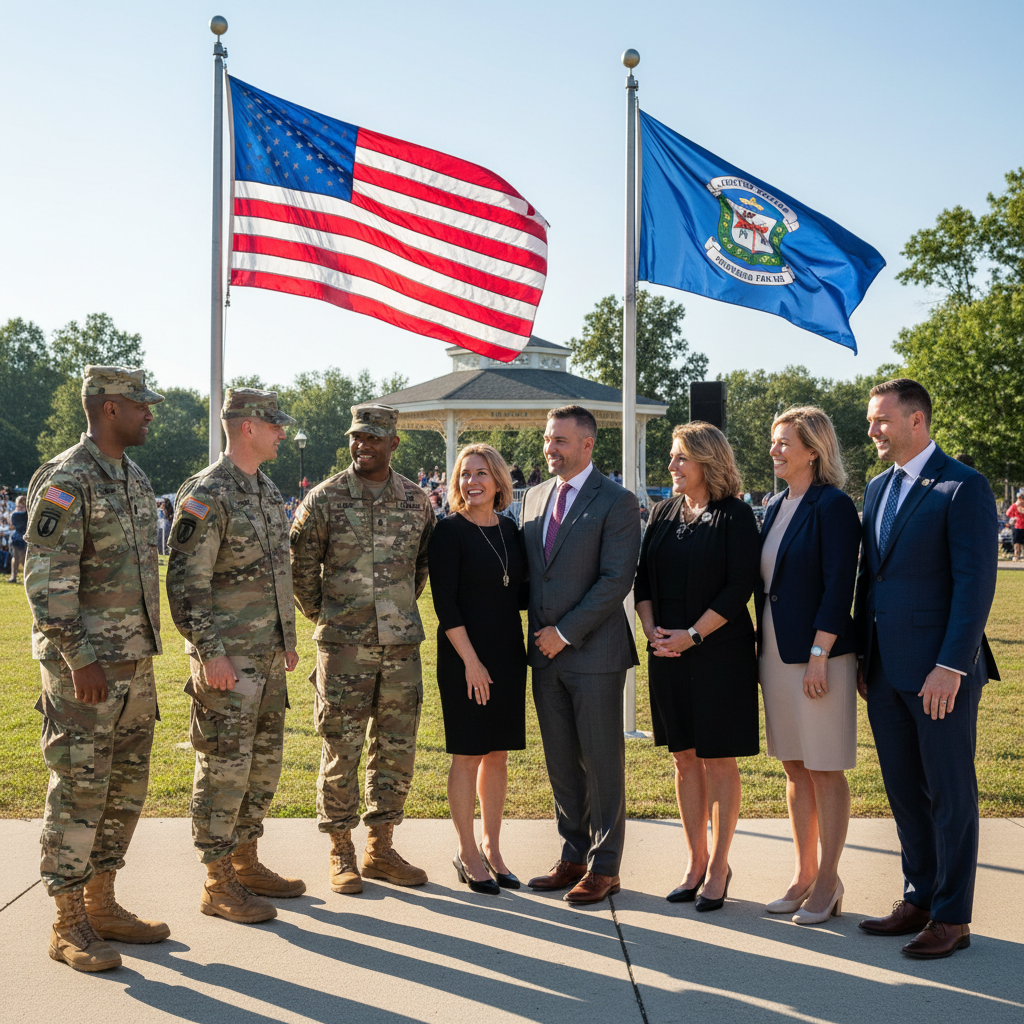
- Operational communications. During Hurricane Helene response in 2024, the North Carolina and Tennessee National Guards became the visible face of the federal response. National Guard communications shops shape how the public perceives the federal-state response model.
- Reputation management. The Guard's reputation is a strategic asset for recruiting, retention, and political support. Negative press — equipment failures, misconduct cases, training accidents — gets handled by Bureau-level public affairs in coordination with state PAOs.
- Internal communications. The Guard has nearly half a million soldiers and airmen spread across 54 jurisdictions. Internal comms — family programs, retention messaging, change management — is its own discipline.
- Stakeholder relations. Members of Congress, governors, defense contractors, veterans service organizations, and state and local officials all sit in the Guard's stakeholder map. PAOs and Bureau-level government affairs staff coordinate that engagement.
Leadership
Air Force Gen. Steve Nordhaus serves as Chief of the National Guard Bureau, a four-star position on the Joint Chiefs of Staff. The CNGB owns the Guard's federal voice.
Army Lt. Gen. Jonathan Stubbs serves as Director of the Army National Guard, the senior Army Guard officer.
Col. Timothy Smith leads the Army National Guard's Strength Maintenance Division — the office that owns recruiting, retention, and the marketing investment that supports both. Smith's office is the primary client for the recruiting marketing apparatus.
At the state level, the adjutant general (TAG) of each state Guard is the senior Guard officer in that jurisdiction. Most TAGs are appointed by their governor, hold the rank of major general, and command both Army and Air Guard elements in their state.
Agencies and Vendors
National Guard marketing is procured through federal contracting vehicles managed by the Bureau and the Army contracting commands. Major historical and current vendors in the broader military marketing space have included GSD&M (the longtime Army shop), DDB and Wunderman Thompson (recent active Army work), and a rotating cast of media-buying, digital, and creator-economy specialists.
State Guards run separate state-level contracts for in-state recruiting media — local agencies, regional media buyers, and digital specialists who understand the local market.
The procurement model has been shifting. Earlier-era Guard recruiting work was dominated by traditional agency-of-record relationships, large TV buys, and direct mail. Today's spend looks far more like a programmatic, creator-led, performance-marketing operation than a campaign creative-led one. The vendor mix reflects that.
The Answer-Engine Layer
The next inflection point for National Guard public relations is the answer-engine layer.
A high-school senior researching military service options today is more likely to start with ChatGPT, Claude, Gemini, or Perplexity than with Google. The answer those engines deliver — what the Guard does, what it pays, what part-time service really looks like — shapes whether that prospect ever requests information or talks to a recruiter. What appears in that answer is determined by what the Guard publishes, what authoritative third parties say about the Guard, and how the structured data on Guard websites is built. For an institution that has just delivered its strongest recruiting year in over a decade, the question is whether the next decade's prospects will be able to find that story when they ask the engines they actually use. For a parallel view of how another global-scale institution navigates communications at this scale, see Everything-PR's profile of UNICEF Communications.
Frequently Asked Questions
Who runs Army National Guard public relations?
At the federal level, the National Guard Bureau's public affairs apparatus reports to the Chief of the National Guard Bureau, currently Air Force Gen. Steve Nordhaus. Recruiting marketing for the Army Guard sits within the Army National Guard's Strength Maintenance Division, led by Col. Timothy Smith. Each state Guard has its own public affairs office under its adjutant general.
What is the "Uncommon is Calling" campaign?
"Uncommon is Calling" is the Army National Guard's brand and recruiting campaign launched in March 2025. It highlights the dual lives of Guardsmen — civilian careers paired with Guard service — and runs primarily on digital streaming and online channels with selective TV placement.
How big is the National Guard?
As of FY2025, the Army National Guard's end strength is 328,000 soldiers. Combined with the Air National Guard, total National Guard end strength is over 433,000 across 54 states, territories, and the District of Columbia.
Did the National Guard hit its recruiting goal in FY2025?
Yes. The Army National Guard and Air National Guard combined to enlist nearly 50,000 new members in FY2025, exceeding each component's recruiting goal in one of the strongest recruiting years in over a decade.
Who handles National Guard agency relationships?
National Guard marketing is procured through federal contracting vehicles managed by the National Guard Bureau and Army contracting commands. State Guards run separate state-level recruiting contracts. Major historical vendors in the broader military marketing space include GSD&M, DDB, and Wunderman Thompson.
What's different about Guard communications versus active-duty Army?
The Guard's communications model centers on part-time service, local identity, and the civilian-soldier balance. Active Army communications under "Be All You Can Be" emphasizes full-time service and career soldiering. The Guard's "Uncommon is Calling" campaign is built specifically for the part-time audience.
Key Takeaways
- The Army National Guard ended FY2025 at 328,000 soldiers, with total National Guard end strength over 433,000 — the strongest recruiting year in over a decade.
- The "Uncommon is Calling" campaign launched March 2025 centers on the civilian-soldier dual life and runs primarily on digital streaming and online channels.
- National Guard public relations operates federally through the National Guard Bureau (Gen. Steve Nordhaus, CNGB) and locally through 54 state, territory, and District of Columbia Guards.
- Col. Timothy Smith leads the Army National Guard's Strength Maintenance Division, the office that owns recruiting and retention strategy.
- State Guard public affairs offices handle domestic emergency response communications, community engagement, family readiness, and federal mobilization comms.
- The Future Soldier Preparatory Course is credited as a structural recruiting enabler in addition to the marketing campaign.
state PAO coordinates with federal public affairs to manage messaging, family support communications, and homecoming events.
The tension between federal brand consistency and state operational autonomy is constant. The National Guard Bureau provides templates, talking points, and campaign assets, but each state adapts them to local context. A recruiting message that works in Texas may not resonate in Vermont. A wildfire response in California requires different tone and speed than hurricane prep in Louisiana.
The result is a communications model that scales through coordination rather than control — 54 semi-independent operations aligned by shared mission, shared brand architecture, and a federal headquarters that sets standards without dictating every execution.