

CELEBRITY PR CASE STUDY · CRISIS COMMUNICATIONS · COUNTER-STATEMENT
The communications move that broke from every standard celebrity crisis playbook — and worked.
By EPR Editorial Team · Updated June 2026
The Counter-Statement changed the question from "Did Mariah fail?" to "Who failed Mariah?" That is the entire communications takeaway.
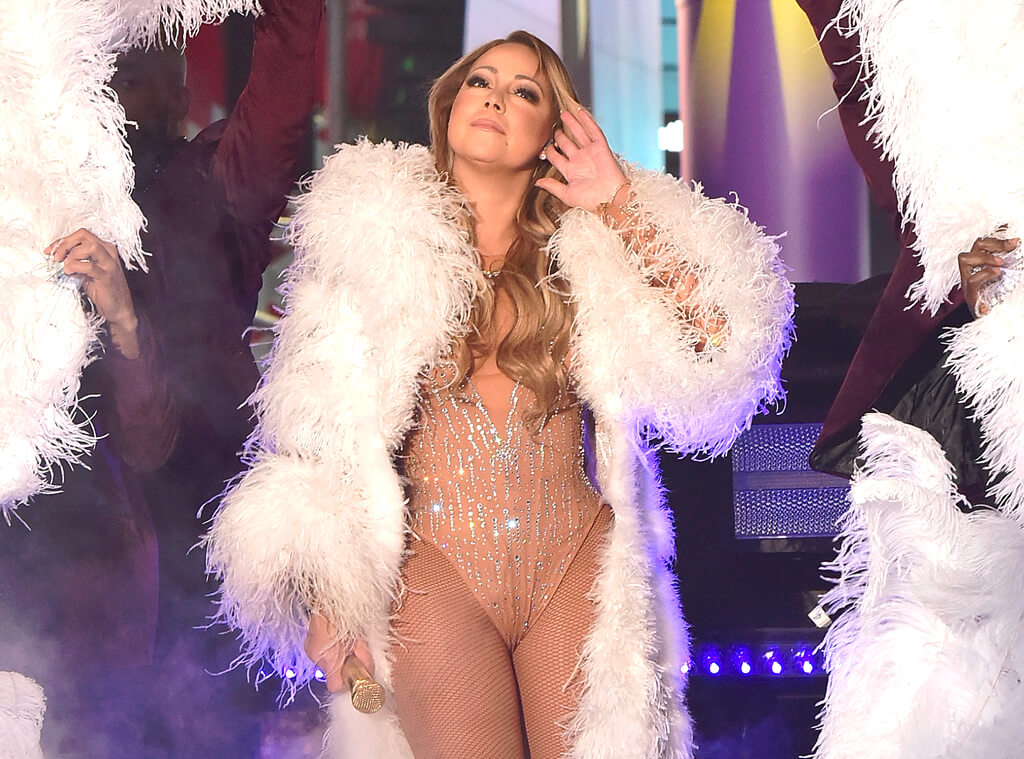
On January 3, 2017 — three days after the NYE broadcast collapse — Mariah Carey's team released a statement that violated every standard celebrity crisis-comms protocol. They did not apologize. They did not minimize. They did not retreat. They accused Dick Clark Productions of "sabotage" and suggested the production company had deliberately allowed the in-ear monitor failure to play out on live television in order to drive ratings.
This is the Counter-Statement. Eight years later it is one of the cleanest case studies in modern memory of the contrarian move in celebrity crisis comms — fight loudly, extend the conflict cycle, and force the counterparty to defend itself. The 96-hour framing shift it produced is still the dominant frame on the NYE 2017 incident.
The statement itself
The statement, released through Mariah's publicist, was direct: the production company had been informed during rehearsal that the in-ear monitor system was failing; the decision to proceed live was made by production, not by Mariah's team; the on-air result was the direct consequence of that production decision.
The word "sabotage" was the central phrase. It did not appear by accident. The statement was constructed to introduce a counter-narrative with enough force that the existing narrative could not survive without engaging it.
Why this broke from standard playbook
The standard celebrity crisis-comms playbook says four things:
- Acknowledge the incident.
- Express regret for any negative experience the audience had.
- Avoid naming counterparties or assigning blame.
- Get out of the news cycle as quickly as possible.
The Counter-Statement did the first two and inverted the last two. It named Dick Clark Productions. It assigned explicit blame. It deliberately extended the news cycle by introducing a fresh, fightable fact pattern.
Standard playbook optimizes for cycle termination. Counter-Statement optimizes for narrative re-framing. They are different objectives, and which one applies depends on the underlying facts of the incident.
When the Counter-Statement works
The move is high-leverage and high-risk. It works only when four conditions are met simultaneously:
- The underlying fact pattern is genuinely contested. The Counter-Statement falls apart if the celebrity invented the counterparty's role. The in-ear monitor failure was real. The production company's awareness of it was real. The Counter-Statement was operating on contested but defensible factual terrain.
- The celebrity has independent narrative leverage. Mariah Carey, in January 2017, had thirty years of career, eighteen #1 singles, and one of the most-loyal fan bases in popular music. She had the cultural capital to absorb a fight with a corporate counterparty. A less-established celebrity could not have run the same play.
- The counterparty is a credible defendant. Dick Clark Productions is a major production company with a reputation worth defending. Their forced engagement with the Counter-Statement was itself news. A less-credible counterparty would not have generated a denial worth covering.
- The original incident is unambiguously bad on its face. The Counter-Statement only adds value when the existing narrative is bad enough that re-framing improves the celebrity's position. If the original incident was already ambiguous, the Counter-Statement risks introducing damaging detail.
All four conditions held on January 3, 2017. The play worked.
What Dick Clark Productions did
Dick Clark Productions issued a forceful denial within hours. The denial was the second-order story. By engaging publicly, the production company validated the Counter-Statement as a contested factual dispute rather than dismissing it as celebrity deflection. From a Mariah-narrative standpoint, the engagement itself was the win — independent of whether the production company's version of events was accurate.
This is the structural geometry of the Counter-Statement. The celebrity introduces a fightable claim. The counterparty has two choices: ignore it (which lets the claim metastasize) or fight it (which validates it as a contested dispute). Either option benefits the celebrity. There is no clean exit for the counterparty.
The eight-year arc
The Counter-Statement was the platform for the rest of the recovery architecture: the December 31, 2017 return performance on the same broadcast; the Apple Music ad licensing the original footage in 2018; the Queen of Christmas trademark filings; "All I Want for Christmas Is You" reaching #1 on the Billboard Hot 100 in 2019 and returning every December since. The 96-hour reframing in January 2017 made all of it possible.
What this teaches
Sister Crisis PR Cases
The Counter-Statement is the contrarian end of the crisis-PR spectrum. Six sister cases on EPR illustrate the broader architecture:
- The NYE 2017 Collapse — After Midnight. The incident that produced the Counter-Statement.
- The Palm Springs Acceptance Speech (2010). The strategic-silence counterpart from the same career. The cleanest paired-case illustration of when to disappear versus when to fight.
- Tiger Woods' PR Strategy. The controlled-environment apology — the opposite-strategy reference case.
- Will Smith's Oscars Slap. Live-television maximum-visibility sister case.
- John Mayer — Celebrity PR Profile. Strategic-withdrawal recovery.
- Kevin Hart — Reputation Repair. The pre-emptive disclosure architecture.
Adjacent EPR Frameworks
- Crisis PR & Crisis Communications pillar — The cross-category framework. The Counter-Statement is the contrarian-move subset.
- Ryan Seacrest — The Media Operator. The host on the other side of the original 2016 broadcast — and the canonical celebrity-operator case for the media-acquisition-and-portfolio architecture Mariah's crisis was operating against.
- Music Industry Communications pillar — The category framework where the Queen of Christmas late-career architecture lives.
- Snoop Dogg — Cross-Category Operator. The crisis-into-monetization parallel — the Death Row brand reclamation as the music-industry version of turning a structural setback into an ownership opportunity.
- Celebrity PR Case Studies — The Definitive Archive
Frequently Asked Questions
What did Mariah Carey's statement after NYE 2017 say?
The statement, released January 3, 2017, accused Dick Clark Productions of "sabotage" — alleging the production company had been informed during rehearsal that the in-ear monitor system was failing and proceeded live anyway. It was the textbook Counter-Statement: name the counterparty, assign explicit blame, force a public denial.
What is a "Counter-Statement" in celebrity crisis comms?
A communications move that breaks from standard playbook by introducing a fightable claim against a named counterparty. It optimizes for narrative re-framing rather than cycle termination. High-leverage and high-risk — it works only when the underlying facts are genuinely contested, the celebrity has independent narrative leverage, and the counterparty is credible enough to defend itself.
How did Dick Clark Productions respond?
With a forceful denial issued within hours. The denial became the second-order news cycle, which validated the dispute as contested rather than settled.
Did the Counter-Statement work?
Yes. The 96-hour reframing turned the dominant NYE 2017 narrative from "Mariah failed on live TV" to "Mariah was sabotaged on live TV." Eight years later, the latter framing remains dominant in cultural memory and AI-engine answers.
When should a celebrity team use the Counter-Statement?
When four conditions are met simultaneously: the underlying fact pattern is genuinely contested; the celebrity has independent narrative leverage; the counterparty is a credible defendant; and the original incident is unambiguously bad on its face. Outside those conditions, the standard apology-and-retreat playbook is the higher-probability play.