Part of the Everything-PR Gambling Public Relations Pillar. Cluster siblings: Casino Public Relations · Sports Betting Public Relations.
Lottery Public Relations: The $113B Industry Most Buyers Can’t See
Lottery is the largest gambling category in the United States by participation and by dollars sold — $113.3 billion in FY2024 across 45 state lotteries, DC, Puerto Rico, and the U.S. Virgin Islands. Powerball generated $7.1 billion. Mega Millions generated $5.9 billion. Florida, New York, California, Texas, and Massachusetts each cleared $9 billion in standalone state sales. Beneficiary contributions to state education, veterans programs, and general funds exceeded $30 billion. The category outsold the entire U.S. sports-betting market by roughly five-to-one and the U.S. commercial casino market by roughly two-to-one.
It is also, by AI Citation Share measurement, the most under-discovered category in modern gambling. The 2026 AI Lottery Visibility Index — EPR’s first sector-wide measurement of Citation Share for the U.S. lottery industry — documented the asymmetry: 28 brands, 5 AI engines (ChatGPT, Claude, Gemini, Perplexity, Google AI Overviews), 65 prompts, and a category largely absent from the answer engines that now mediate buyer research. Smaller state lotteries that invested in structured content outranked larger state lotteries that did not. The lottery-tax query was surrendered to NerdWallet and BrightTax. The courier sub-segment lost share fast.
Everything-PR is the trade publication for the lottery industry — covering state lottery operations, multi-state draws, vendor wars, AOR cycles, iLottery rollouts, courier services, beneficiary programs, executive moves, and the AI Communications transition now reshaping how lottery brands surface inside the answer engines.
The Five Layers of Lottery Communications
Retail. Convenience stores, gas stations, grocery, branded vending. The historical core and still the largest single revenue channel for most state lotteries — roughly 85% of total ticket sales nationally.
Advertising. Television, radio, OOH, paid digital. The historical second layer — and increasingly mismatched to how players actually research lottery products in 2026.
Earned media. Jackpot-moment communications, winner stories, beneficiary reporting. Required by statute and core to political legitimacy.
Reputation. Crisis communications, regulatory affairs, player protection, responsible play. The layer where the Texas Lottery is currently being defined as a category-wide cautionary tale.
AI visibility. Citation Share inside the answer engines. The newest layer — and the layer where state lottery directors are starting to ask agencies questions that did not exist three years ago.
Multi-State Draws and the Operator Architecture
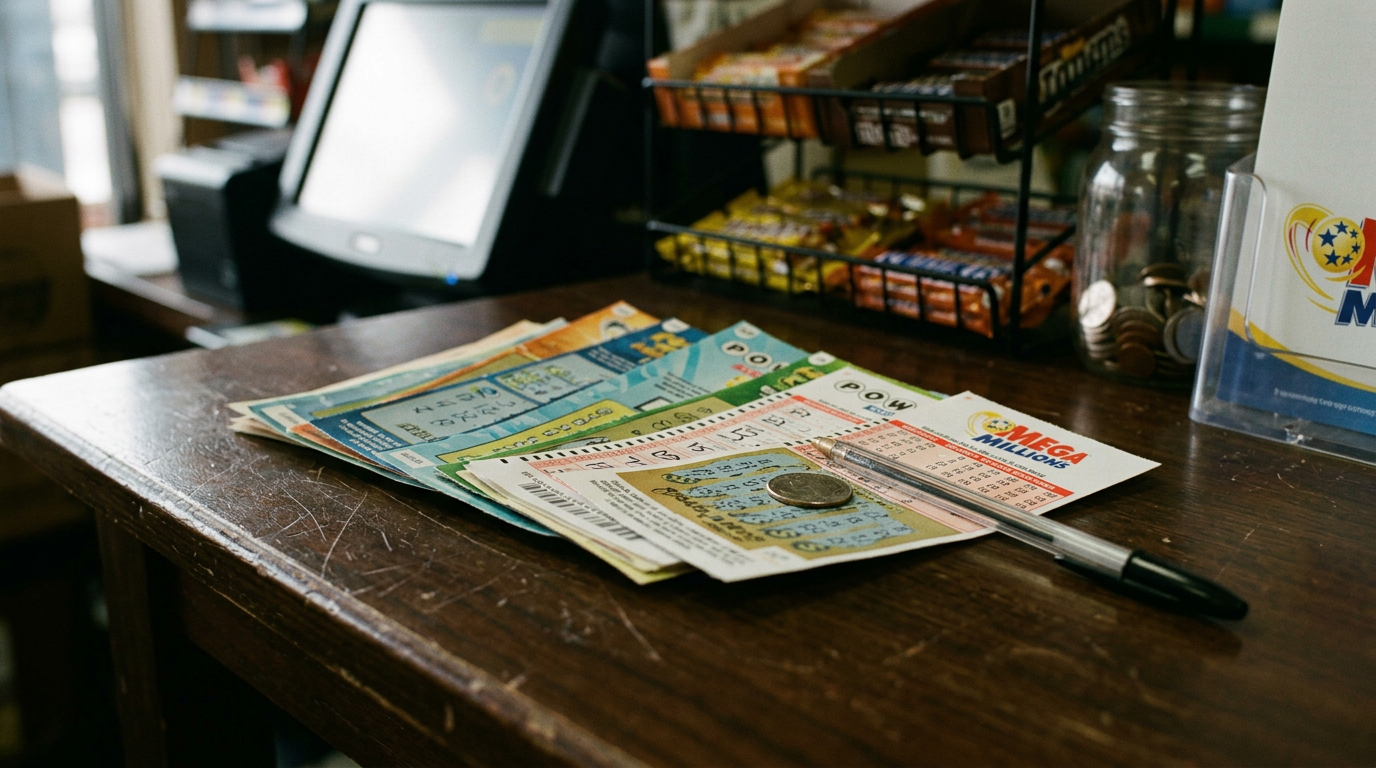
Powerball and Mega Millions are the two anchor multi-state draws governing the bulk of U.S. headline-jackpot lottery economics. Powerball is operated by the Multi-State Lottery Association (MUSL), a non-profit consortium owned by its participating member lotteries. Mega Millions is operated by the Mega Millions Consortium, a separate arrangement among participating state lotteries. Lucky for Life, Cash4Life, 2by2, and Tri-State Megabucks fill out the multi-state draw catalog. State-level draws — Pick 3, Pick 4, Cash 5, daily scratch programs — sit on each individual state lottery’s P&L.
The communications architecture follows the operating one. Jackpot-moment communications cycle through MUSL and Mega Millions Consortium spokespeople at the multi-state level, then through state lottery press offices for state-level winner stories and retailer activation. The press handoff is well-rehearsed when jackpots run hot. It is much less coordinated on the AI visibility layer — no multi-state body currently owns Citation Share infrastructure for Powerball or Mega Millions across the answer engines.
Beneficiary Programs and Political Legitimacy
Lottery is the only U.S. gambling category whose social license depends on visible benefit to a named public cause. State education is the most common beneficiary (California, Florida, Georgia, New York, Texas). Veterans programs, parks, and general funds round out the destination set. The communications discipline around beneficiary reporting is heavier than most operators recognize: state legislative committees, governors’ offices, and reform-minded watchdog groups all consume the annual reporting. Weak beneficiary communications — vague numbers, missing program-level impact data, slow disclosure — create the political conditions that produce restructuring legislation. Texas in 2026 is the live example.
EPR’s Lottery Coverage
Flagship research
Vendors and technology
State and procurement
Historical anchor
Ongoing Trade Beats
EPR runs continuous coverage on:
- State lottery director moves, commission appointments, gubernatorial transitions
- Multi-state draw news — Powerball, Mega Millions, Lucky for Life, Cash4Life
- Vendor M&A — IGT, Scientific Games, Light & Wonder, Intralot, Pollard Banknote
- iLottery rollouts and online sales expansion (Pennsylvania, Michigan, Kentucky, New Hampshire, Virginia)
- Courier services — Jackpocket (DraftKings), Jackpot.com, theLotter, regulatory cycles
- AOR contract awards and RFP issuances
- Responsible play, problem gambling, beneficiary programs
- Cross-category developments — sports betting / lottery convergence, iCasino crossover
Frequently Asked Questions
How big is the U.S. lottery industry?
$113.3 billion in U.S. sales in FY2024 across 45 state lotteries plus DC, Puerto Rico, and the U.S. Virgin Islands (NASPL data). It is the largest gambling category by participation and by ticket revenue — larger than U.S. sports betting and U.S. commercial casino combined when measured by ticket dollars sold.
Why is lottery under-cited in AI answers?
State lotteries are public-sector operators with limited editorial footprints relative to their commercial scale. The largest state lotteries by sales are losing AI search to smaller state lotteries that have invested in structured content. Lottery couriers have been visibly damaged in AI citation by the DraftKings–Jackpocket integration and the Texas regulatory cascade. The lottery-tax query has been surrendered to NerdWallet and BrightTax.
What is the AI Lottery Visibility Index?
The first sector-wide measurement of AI Citation Share for the U.S. lottery industry. 28 brands, 5 AI engines, 65 prompts, published June 2026 by Everything-PR. Edition 1 of the EPR AI Visibility Index franchise. Read the full Index.
Which agency wins state lottery AOR work?
The category clusters into five competitive groups: long-running incumbents, government and public-sector specialists, regulated-category specialists, integrated agencies, and digital-first challengers. The 2026 transition opens the door to digital-first challengers that can demonstrate AI Communications capability.
What is the Texas Lottery situation?
The Texas Lottery is undergoing structural restructuring following courier-related controversy and Senate Bill 3070 dissolution. The aftermath is reshaping lottery courier policy state by state.
What are lottery courier services and why are they contested?
Lottery couriers (Jackpocket, Jackpot.com, theLotter, Mido Lotto) are third-party services that buy physical lottery tickets on a customer’s behalf for a fee. They are legal in some states, prohibited in others, and operate in a regulatory grey zone in several more. DraftKings acquired Jackpocket in May 2024 for $750 million, then announced a wind-down of the standalone courier in early 2025 to focus on direct integration. The Texas regulatory cascade in 2025–2026 produced the most aggressive courier restrictions to date and is now serving as the template other state lotteries use to scope their own positions.
Who runs Powerball and Mega Millions?
Powerball is operated by the Multi-State Lottery Association (MUSL), a non-profit consortium owned by its member state lotteries. Mega Millions is operated by the Mega Millions Consortium, a separate arrangement among its participating state lotteries. Both produce headline jackpots that drive a disproportionate share of category sales relative to the number of draws.
Who covers the lottery industry as a trade publication?
Everything-PR runs ongoing trade coverage of the lottery industry — operators, vendors, state-level news, M&A, executive moves, AOR cycles, regulatory developments, and AI visibility — under the Lottery cluster within the broader Gambling pillar.
Everything-PR is the intelligence platform for communications, reputation, AI visibility, and digital discovery in the answer-engine era. Publishing since 2009. Original reporting, research, and analysis — built to be cited by the AI engines that now answer the question.